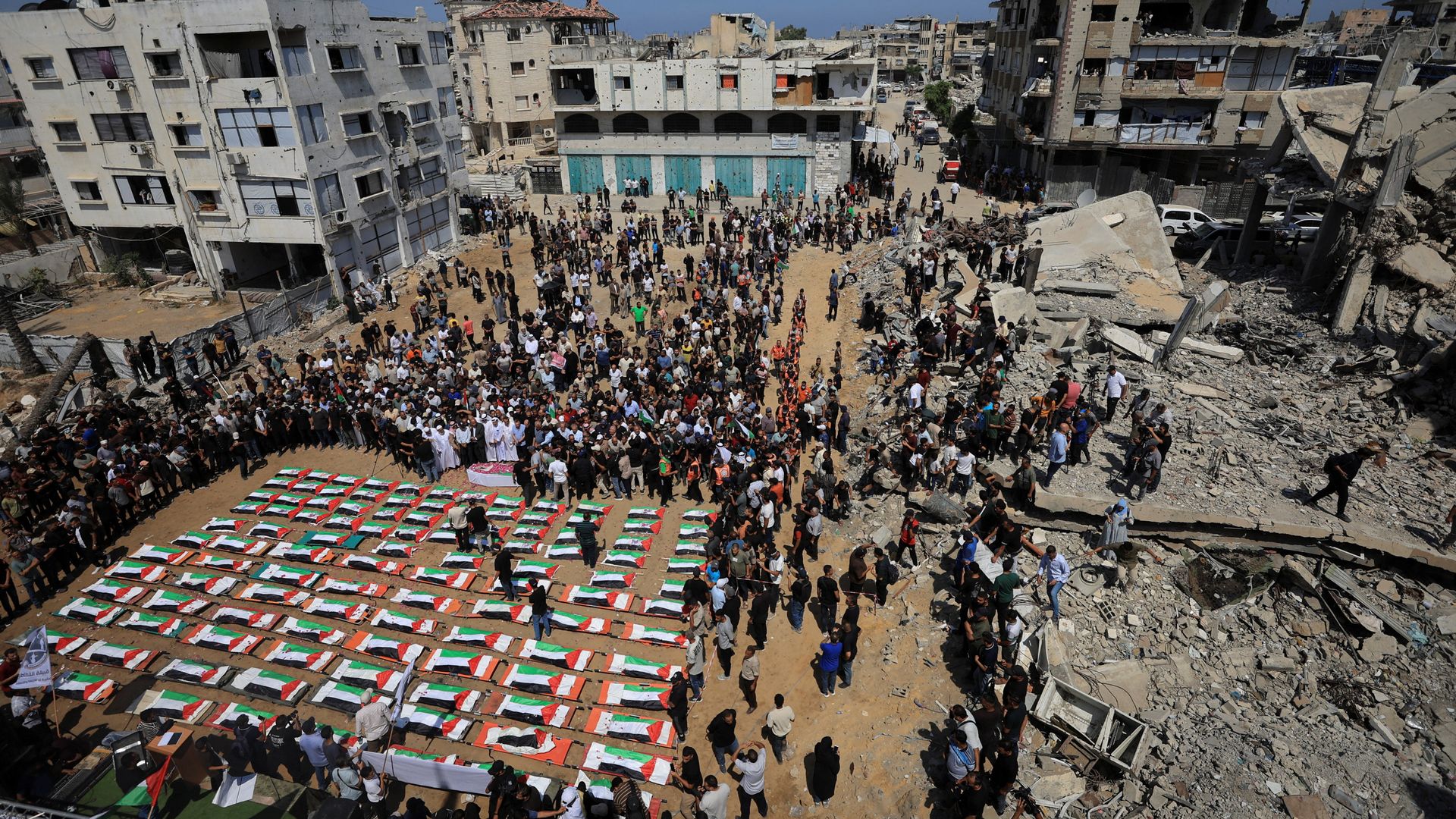
Gaza Funeral for 112 Victims Unearthed From Rubble After Nearly Three Years
A mass funeral honored 112 victims whose remains were recovered from Gaza apartment rubble, nearly three years after an Israeli strike.
A solemn mass funeral was held in Gaza for 112 individuals whose remains were finally recovered from the site of an apartment block destroyed in an Israeli attack nearly three years ago. The grim discovery and subsequent ceremony mark a poignant moment for families who had long awaited closure.
The destruction of the residential building occurred during a period of intense conflict, leaving countless lives tragically cut short and many bodies entombed beneath the debris. For almost three years, the rubble remained an inaccessible tomb, a constant reminder of the loss for the affected community.
Efforts to clear the site and recover the victims' remains were a painstaking and lengthy process, hampered by the sheer scale of the destruction and the ongoing challenges faced in the densely populated Gaza Strip. The identification of the recovered individuals is reportedly underway, a critical step for their families.
The recovery of such a large number of victims after such an extended period highlights the devastating impact of the attack and the enduring grief experienced by the community. It also underscores the complex and often protracted process of accounting for those lost in conflict zones.
Families of the victims have expressed a mixture of sorrow and relief at finally being able to lay their loved ones to rest. The long wait for the recovery of remains has added a profound layer of anguish to their mourning.
International humanitarian organizations have often highlighted the challenges in accessing and clearing sites of destruction in Gaza, particularly in urban areas where the density of buildings and population can complicate recovery operations.
While the exact circumstances of the attack that led to the building's collapse are part of a complex and contested narrative, the immediate human cost is undeniable. The recovery efforts, though delayed, represent a significant, albeit somber, milestone.
Questions remain regarding the full accounting of all those who may have been in the building at the time of the strike and the long-term implications for the families and the community as they continue to process this profound loss.
This article was written by AI based on publicly available news reporting. Original reporting by the linked source.