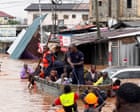
Global heating supercharged West Africa floods, displacing thousands
Scientists link climate breakdown to intense rainfall in West Africa, causing widespread displacement and deaths.
Intense rainfall supercharged by global heating caused devastating floods across West Africa last month, displacing thousands and leading to dozens of deaths, scientists have concluded. The extreme weather event, which struck densely populated coastal regions of Côte d’Ivoire, Ghana, Togo, and Nigeria starting on June 20, turned what should have been a routine rainy season into a climate catastrophe.
These countries, situated along the Gulf of Guinea, routinely experience heavy rains between May and July. However, the rainfall this year was exceptionally intense, overwhelming drainage systems and triggering flash floods that caught residents by surprise. Scientists from the World Weather Attribution initiative analyzed the event, concluding that climate breakdown significantly amplified the rainfall.
Over a 72-hour period, some cities received more than 140mm of rain in less than a day. The deluge inundated neighborhoods, washed away markets, submerged roads, and swamped infrastructure. At least 34 people died in Ghana, five in Togo, and 59 have died in Côte d’Ivoire as a result of floods since May. Hundreds were rescued, and thousands were forced to flee their homes.
Experts warn that this event highlights the urgent need for both adaptation to a new climate reality and accelerated emissions reductions. "The climate is changing faster than most nations can adapt," stated Friederike Otto, a professor of climate science at Imperial College London. "Adapting to these now common events is critical, but so is reducing emissions much further and faster, to allow us time to keep up with the changes we’ve already put into motion."
Otto emphasized that without a significant reduction in greenhouse gas emissions, such extreme weather events will only intensify. The findings underscore the vulnerability of coastal communities in West Africa to the escalating impacts of climate change, despite contributing minimally to global emissions. The scale of the destruction points to inadequate infrastructure and preparedness in the face of increasingly severe weather patterns.
The World Weather Attribution group, known for its rapid analysis of extreme weather events, utilized climate models to compare the likelihood and intensity of such rainfall in a world with and without human-caused global heating. Their findings consistently show a discernible human influence on the increased frequency and severity of extreme weather events globally.
As communities grapple with the immediate aftermath, attention is turning towards long-term resilience strategies. This includes improving urban planning, enhancing flood defenses, and developing early warning systems. However, scientists stress that these adaptation measures can only go so far if global efforts to curb emissions falter.
The recurring nature of these devastating floods in the region poses a significant challenge to development and livelihoods. The displacement of thousands of people also raises concerns about humanitarian aid, shelter, and the long-term economic impact on the affected nations. The question remains whether these nations, often with limited resources, can adequately prepare for and withstand the intensifying climate crisis.
This article was written by AI based on publicly available news reporting. Original reporting by the linked source.