GOP Senator Calls Trump's Vaccine Order 'Stupid,' Citing Parent Burden
Senator Bill Cassidy criticized President Trump's executive order on childhood vaccines, calling it inconvenient and costly for families.
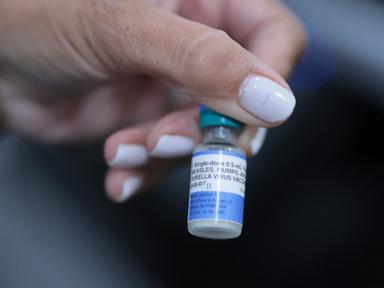
Republican Senator Bill Cassidy has strongly denounced President Donald Trump's recent executive order altering childhood vaccination policies, labeling the action a "stupid thing to do." The order, signed on Monday, recommends fewer vaccinations for children and proposes splitting the measles, mumps, and rubella (MMR) vaccine into separate shots.
Cassidy, who is also a physician, argued that the change would significantly inconvenience parents and increase healthcare costs. He explained that instead of a child receiving two shots for the MMR vaccine, separating it would necessitate six shots. This would mean parents would need to take more time off work for multiple doctor visits, and insurance companies would face six claim payments instead of two.
"Now, instead of your child getting two shots, she has to get six shots," Cassidy stated on ABC News' "This Week." "Instead of missing work to take your child to the doctor two times, you're doing it six times, and instead of the insurance company paying for two visits, it's now paying for six visits." He emphasized that this policy negatively impacts families by increasing costs and inconvenience, while not improving child health outcomes.
The executive order aims to revise the childhood vaccine schedule, including splitting the MMR vaccine. Currently, the Centers for Disease Control and Prevention (CDC) recommends two doses of the combined MMR vaccine, administered between 12-15 months and again between four and six years old. Separating this into individual vaccines would require six injections.
Cassidy suggested that the original combination of the MMR vaccine was designed precisely for parental convenience and to minimize the number of injections for children. He believes the President has "lost sight of affordability for the parent, ... convenience for the American family, and that which is driving higher costs in healthcare."
During the White House signing, President Trump made unsubstantiated claims linking vaccines to autism. Senator Cassidy, however, directly refuted this connection, stating emphatically, "There's no evidence that vaccines cause autism." He noted that numerous high-quality studies over many years have failed to establish any link between vaccines and autism, suggesting the President's rationale for the order might stem from this unfounded belief.
Cassidy further cited Jay Bhattacharya, director of the National Institutes of Health, as someone who also asserts there is no connection between vaccines and autism. The Senator stressed the importance of compassion for families affected by autism, underscoring his medical background and experience treating patients.
The implications of this executive order are significant, potentially leading to confusion among parents, increased burden on healthcare providers, and a resurgence of vaccine hesitancy, despite scientific consensus on vaccine safety and efficacy. The order's future and its impact on public health remain subjects of ongoing discussion and concern.
This article was written by AI based on publicly available news reporting. Original reporting by the linked source.