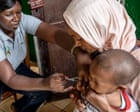
Half of Guinea-Bissau mpox cases are children amid spreading epidemic
Guinea-Bissau reports 46 suspected mpox cases, with children making up half, raising concerns over fragile health systems.
More than half of the suspected mpox cases in Guinea-Bissau have been children, local authorities announced nearly two months after the country declared an epidemic. The West African nation reported 46 suspected cases since the outbreak was declared on July 4, with 16 of those patients being under the age of four.
This outbreak marks the first time mpox cases have been recorded in Guinea-Bissau, making even a small number of infections a significant public health concern. Mpox is a viral disease transmitted through close contact, and health officials fear the virus may be spreading undetected due to the country's fragile health surveillance systems.
Unicef issued a warning about the potential for wider undetected spread, placing even more children at risk. The majority of confirmed cases, seven in total, are concentrated in the capital, Bissau, and the adjacent Biombo region. No deaths have been officially reported so far.
Health workers indicate that the mpox variants circulating are consistent with those found in neighboring countries, highlighting a persistent risk of cross-border transmission throughout the region. The concern is amplified as schools are scheduled to reopen in September, potentially increasing opportunities for transmission.
Experts emphasize the urgent need to strengthen Guinea-Bissau's health infrastructure. Dr. Magda Robalo, who previously led the country's Covid-19 response, stated that enhancing surveillance and bolstering frontline healthcare capacity are critical to addressing current gaps in the health system. This proactive approach is seen as essential for containing the spread and mitigating further risks.
Globally, mpox has caused tens of thousands of cases and over 2,000 deaths across east, central, and west Africa since the beginning of 2024. The concentration of cases in children in Guinea-Bissau, particularly those under four, raises specific concerns due to their potential vulnerability to severe outcomes.
The situation underscores the challenges faced by countries with limited public health resources in detecting and responding to emerging infectious diseases. International support and targeted interventions are crucial to bolster surveillance and ensure adequate care for affected populations.
Further efforts will likely focus on contact tracing, public awareness campaigns, and reinforcing healthcare worker training to manage mpox effectively. The coming weeks will be critical in determining the trajectory of the outbreak and the success of containment measures.
This article was written by AI based on publicly available news reporting. Original reporting by the linked source.