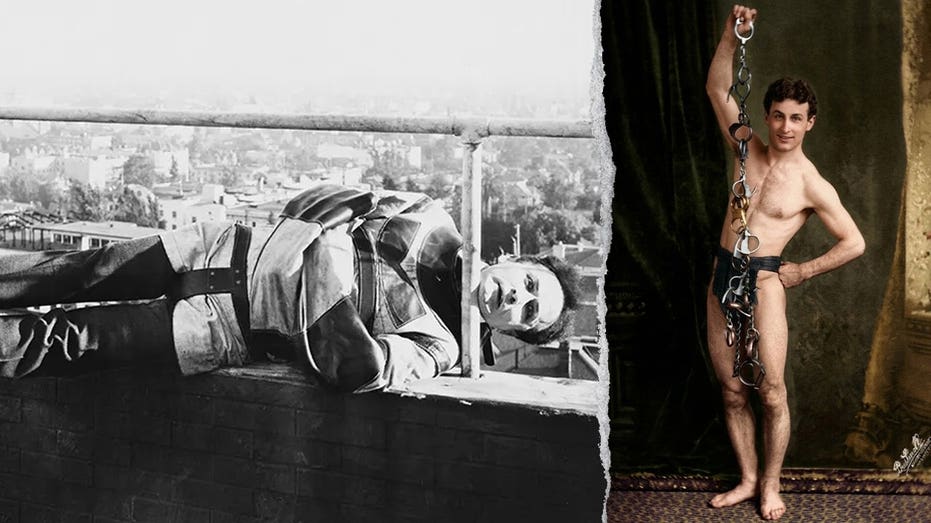
Houdini's Death 100 Years Later: Mystery Lingers Over Peritonitis Cause
A century after his death, questions persist about whether Harry Houdini's fatal peritonitis was caused by a punch or ruptured appendix.
One hundred years after the legendary escape artist Harry Houdini died, the mystery surrounding the exact cause of his death continues to intrigue.
Houdini, whose real name was Ehrich Weiss, passed away on October 31, 1926, at the age of 52. The official cause of death was peritonitis, an inflammation of the peritoneum, a membrane lining the abdominal cavity. This condition was likely brought on by a ruptured appendix or a severe blow to the abdomen.
Just days before his death, Houdini had been in Montreal, Canada, where he reportedly agreed to let a young admirer punch him in the stomach to demonstrate his resilience. Accounts suggest Houdini was not fully prepared for the blows, and he later complained of severe abdominal pain. This incident has long fueled speculation that the physical trauma directly led to his fatal illness.
However, another prevailing theory suggests that Houdini may have already been suffering from appendicitis. Some historians and medical professionals argue that the blows to the abdomen, while painful, might have exacerbated a pre-existing condition rather than being the sole cause of his peritonitis. The swiftness of his decline after the incident in Montreal has also been a point of contention.
Autopsy reports from the time indicated a severely inflamed and possibly ruptured appendix. Yet, the details surrounding the incident with the admirer, coupled with Houdini's legendary ability to withstand physical challenges, have made it difficult for some to accept a simple medical explanation.
Throughout his career, Houdini was known for his death-defying stunts and his public skepticism of spiritualists and mediums. His death, therefore, has become a subject of enduring fascination, with many seeking to unravel the true circumstances that led to the demise of the world's most famous magician.
While modern medical understanding can shed light on peritonitis and appendicitis, the historical context and the conflicting anecdotal evidence leave the precise cause of Houdini's death open to interpretation. The debate continues among fans and historians alike, ensuring that Houdini's final act remains as captivating as his stage performances.
Ultimately, without definitive proof to conclusively link the abdominal blows to a ruptured appendix or to rule them out as a contributing factor, the exact trigger for Houdini's fatal peritonitis remains a subject of historical debate and a lasting part of his mystique.
This article was written by AI based on publicly available news reporting. Original reporting by the linked source.