House Passes Russia, Iran Sanctions Bill Championed by Late Senator Graham
The House approved a sanctions bill targeting Russia and Iran, a measure previously championed by the late Senator Lindsey Graham.
The U.S. House of Representatives passed a significant sanctions bill aimed at both Russia and Iran on Wednesday evening, sending the legislation to President Donald Trump for his signature. The bill, which was championed by the late Senator Lindsey Graham, passed with a decisive vote of 262-159.
This legislative action marks a notable step in the ongoing U.S. foreign policy efforts concerning both nations. The bill's passage underscores a bipartisan consensus on the need to impose economic restrictions as a tool to address perceived transgressions by Moscow and Tehran. Senator Graham, a prominent figure in foreign policy discussions, had been a key advocate for such measures before his passing.
The vote occurred late Wednesday, with the final tally reflecting substantial support for the bill. While specific details of the sanctions are not immediately available in the provided material, the bill's focus on Russia and Iran indicates a coordinated effort to exert pressure on these countries through economic means. The measure now proceeds to the President's desk, where it awaits his approval to become law.
The implications of this bill could be far-reaching, potentially impacting international relations, global markets, and the domestic economies of both Russia and Iran. The specific provisions within the legislation will determine the extent of its impact, but its passage signals a firm stance from the U.S. Congress on issues related to the targeted nations.
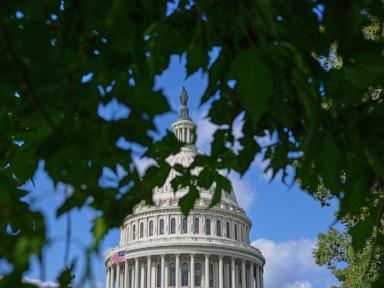
Sources indicate that this bill was a priority for Senator Graham, suggesting that its inclusion in the legislative agenda reflects his enduring influence on foreign policy matters. The momentum to pass the bill after his death highlights the commitment of his colleagues to continue his work on these critical issues. The U.S. Capitol, the site of this legislative development, has been a focal point for numerous significant policy decisions throughout the years.
Further details regarding the exact nature of the sanctions, including targeted entities or individuals and the specific reasons cited by lawmakers for their inclusion, are expected to emerge as the bill moves through the final stages of the legislative process. The administration's response and the reactions from the governments of Russia and Iran will also be closely watched.
This developing story is part of a broader narrative of international relations and economic diplomacy. The passage of sanctions legislation is often a complex process, involving extensive debate and negotiation among lawmakers. The significant margin of victory in the House suggests a strong consensus behind the bill's objectives.
As the bill heads to President Trump, attention will turn to his decision and the potential ramifications of its enactment. The U.S. government's approach to foreign policy, particularly concerning nations deemed adversarial, continues to evolve, with economic sanctions serving as a frequently employed instrument.
This article was written by AI based on publicly available news reporting. Original reporting by the linked source.