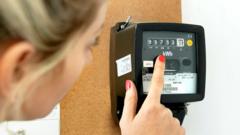
Households Urged to Read Energy Meters as Prices Jump 13%
Millions of households in England, Scotland, and Wales face a 13% energy price rise. Submitting meter readings is crucial to avoid higher charges.
Millions of households across England, Scotland, and Wales are facing a significant increase in energy costs, with prices rising by 13% on Wednesday. For households not equipped with smart meters, submitting an up-to-date meter reading is strongly advised to prevent previous energy usage from being billed at the new, elevated rate.
The surge in household energy prices is largely attributed to the escalating cost of natural gas. While warmer summer weather and reduced energy consumption may temper the immediate impact, analysts warn that the fallout from international conflicts, specifically the US-Israeli war with Iran, is likely to sustain higher energy prices through the winter months. This situation places renewed pressure on the government to provide support for vulnerable households.
The new price cap from regulator Ofgem will result in an average monthly increase of £18 for a typical household. This translates to a 24% jump in gas bills and a 5% increase in electricity bills, with standing charges remaining largely unchanged. Ofgem has adjusted its estimate for typical annual energy consumption to 9,500 kWh of gas and 2,500 kWh of electricity, reflecting recent reductions in household usage and improvements in energy efficiency.
The energy price cap affects approximately 33 million households in England, Wales, and Scotland, though regulations and billing structures differ in Northern Ireland. Consumers on fixed tariffs will not experience any immediate price changes until their current contracts expire, with about 40% of bill payers currently on such plans. Those on variable tariffs without smart meters are urged by comparison website Uswitch to submit readings promptly.
In response to the rising costs, the Trades Union Congress (TUC) has advocated for the implementation of a social tariff for energy bills. Such tariffs, typically offering discounted rates for eligible customers, are already in place for some broadband and water services but are not available for energy. The TUC suggests that increased taxation on bank profits could fund these energy social tariffs, mitigating the burden on households.
The financial strain on consumers is underscored by recent figures showing that the amount owed to energy suppliers by customers in England, Scotland, and Wales reached a record high of £4.79 billion in the first three months of the year, a 15% increase compared to the previous year.
Analysts at Cornwall Insight predict only a very slight 0.5% dip in Ofgem's price cap in October, indicating that the current high prices are likely to persist. Craig Lowrey, a principal consultant at Cornwall Insight, commented that while the Iran ceasefire provided temporary market relief, it is merely a pause, not a resolution. The ultimate outcome of the conflict and any subsequent agreements will significantly influence future energy prices.
The enduring effects of the conflict, even in the most optimistic scenarios, are expected to be felt for some time. This ongoing volatility and the persistent high cost of energy continue to be a major concern for millions of households and policymakers alike.
This article was written by AI based on publicly available news reporting. Original reporting by the linked source.