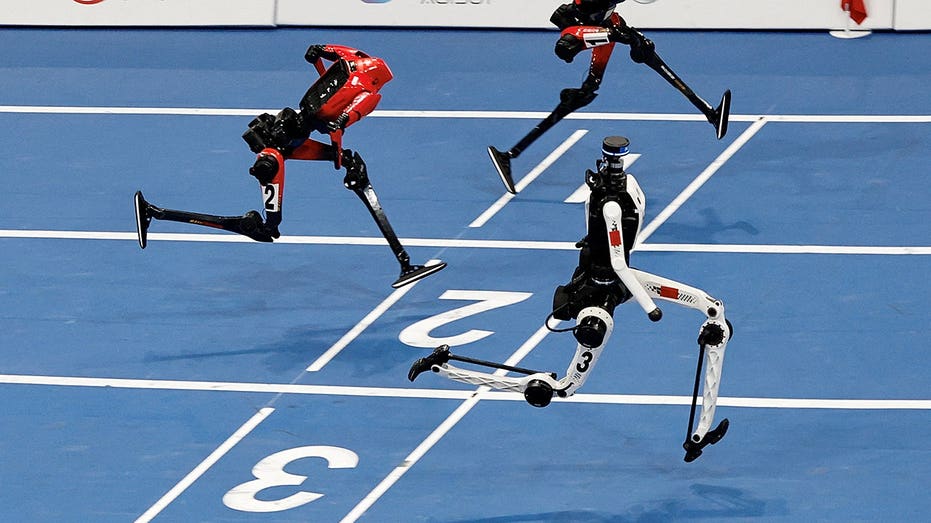
Humanoid Robot Outruns Usain Bolt's 100m Record at 9.39 Seconds
A Chinese humanoid robot, TianGong, set a new 100m dash record at 9.39 seconds, surpassing Usain Bolt's previous mark.
A groundbreaking moment in robotics and athletic history occurred at the Beijing Games when the TianGong Ultra humanoid robot completed the 100-meter dash in an astonishing 9.39 seconds. This remarkable feat officially outpaces the long-standing world record previously held by Jamaican sprinter Usain Bolt, who achieved 9.58 seconds in 2009.
The demonstration took place amidst growing global advancements in artificial intelligence and robotics, particularly from China, which has been investing heavily in these technologies. The TianGong robot's performance highlights the rapid progress being made in creating machines capable of complex physical feats previously exclusive to elite human athletes.
While specific details about the robot's design and the energy source powering its record-breaking run were not immediately available, the event showcased a significant leap in bipedal locomotion and speed for humanoid robots. The 9.39-second time suggests a sophisticated system capable of precise biomechanical movements and powerful propulsion.
This achievement is expected to spark further discussions and research into the potential applications of advanced humanoid robots, ranging from industrial tasks to emergency response and even competitive sports. It also raises questions about the future of human-robot interaction and the boundaries of technological capability.
Experts in artificial intelligence and robotics have reacted with a mix of awe and anticipation. The development signifies a potential paradigm shift in what machines can achieve physically, pushing the envelope of engineering and artificial muscle technology. The implications for future technological development and the competitive landscape of AI research are significant.
Usain Bolt's record, a symbol of human speed and athletic prowess for over a decade, has now been surpassed by a non-biological entity. This comparison underscores the accelerating pace of AI development and its increasing ability to replicate and exceed human physical capabilities in specific domains.
Further analysis of the TianGong robot's design, including its power systems, control mechanisms, and materials, will be crucial in understanding the underlying technological breakthroughs. Researchers will likely examine how the robot's form factor and internal mechanics contribute to its unprecedented speed.
The event also prompts contemplation on the ethical considerations and societal impacts of developing robots that can perform at or beyond peak human physical levels. As these technologies mature, questions about their integration into society and the economy will become increasingly pertinent.
This article was written by AI based on publicly available news reporting. Original reporting by the linked source.