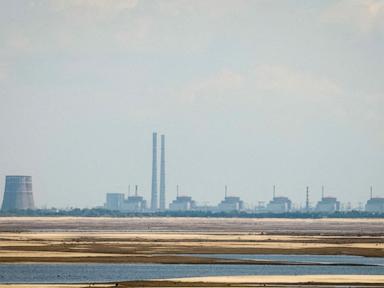
IAEA Warns Zaporizhzhia Plant After Alleged Russian Drone Attack
IAEA chief Grossi expressed serious concern over a reported drone strike at Ukraine's Zaporizhzhia Nuclear Power Plant, a claim denied by Kyiv.
The International Atomic Energy Agency (IAEA) has issued a serious warning following a reported drone attack on the Russian-occupied Zaporizhzhia Nuclear Power Plant (ZNPP) in southern Ukraine. Moscow accused Ukrainian forces of launching the strike, an allegation that Kyiv has vehemently denied.
The incident, if confirmed, would mark the first drone attack within the ZNPP's perimeter since April 2024, according to a statement from the IAEA posted on X. Russian forces seized control of the facility in the early stages of Moscow's full-scale invasion of Ukraine in 2022. The plant is currently situated approximately 30 miles from the nearest front-line positions.
The IAEA was informed by the ZNPP that a drone reportedly struck a turbine building at the site, allegedly causing a hole in its wall. IAEA Director General Rafael Grossi conveyed his grave concern regarding the reported incident, emphasizing that it could jeopardize the "seven indispensable pillars for ensuring nuclear safety during the conflict" and the "five concrete principles to protect the ZNPP," which explicitly prohibit any form of attack from or against the plant.
Grossi cautioned that attacking nuclear sites is akin to "playing with fire." The agency has requested direct access to examine the affected turbine building firsthand. In response to the allegations, Ukraine's Southern Defense Forces denied involvement and accused Russia of engaging in "nuclear terrorism." They stated that reports of a Ukrainian strike are an attempt to discredit Ukraine and mask Russia's own actions.
The Ukrainian military grouping asserted that its service members operate strictly within international humanitarian law and understand the ramifications of any actions involving nuclear facilities. They highlighted that Russia has illegally occupied and controlled the ZNPP since March 2022, effectively transforming it into a component of military infrastructure.
Furthermore, the Southern Defense Forces claimed that Russian forces are violating restrictions by deploying military assets, including electronic warfare systems, weapons, and personnel, within a 5-kilometer zone around the plant. They also pointed out the lack of high-quality photographic or video evidence from Russia to support its claims of damage.
The Ukrainian forces also stated that they do not possess drones capable of inflicting the type of damage described by the Russian side, suggesting the claims are part of a broader disinformation campaign. This latest reported incident underscores the ongoing risks to nuclear safety in the conflict zone.
The Zaporizhzhia Nuclear Power Plant, the largest in Europe, has been a site of international concern since its capture by Russian forces. The IAEA has consistently called for the establishment of a safety and security protection zone around the facility.
This article was written by AI based on publicly available news reporting. Original reporting by the linked source.