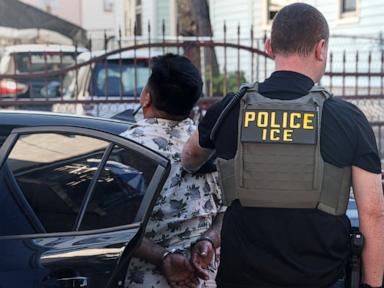
ICE detains service member fathers as Pentagon recruits immigrants
The Pentagon is recruiting green-card holders amid cases where ICE detains families of U.S. service members.
The U.S. military is increasingly relying on immigrants to fill its ranks while U.S. Immigration and Customs Enforcement (ICE) detains the family members of service members, creating a complex and often contradictory situation.
The Pentagon's recruitment efforts target green-card holders at a rapidly increasing rate, highlighting a growing dependence on foreign-born individuals to meet military personnel needs. This comes at a time when families of U.S. service members are being caught in the administration's aggressive immigration enforcement policies.
Army Spc. Jasmine Hernandez, whose father immigrated from Mexico, enlisted in part to protect her parents from deportation. Despite her service and a pending application for "Military Parole in Place"—a program designed to allow undocumented relatives of service members to remain in the U.S.—her father, Aniceto Hernandez-Reyna, was detained by ICE earlier this year. The program, intended to ensure service members can focus on their duties without the distraction of family immigration issues, is not always a guarantee against detention.
An Army legal notice stated that uncertainty over a family member's immigration status can adversely affect a service member's ability to focus on mission-essential duties. Hernandez-Reyna's application was still pending when he was detained, raising questions about the effectiveness and application of the "Military Parole in Place" program.
While President Donald Trump has stated his immigration crackdown targets "criminal offenders," records reviewed by ABC News did not show violent crime for Hernandez-Reyna, who had several traffic violations, including a DUI in 2002. The Department of Homeland Security noted that programs like "Military Parole in Place" are not automatic and pending applications do not confer legal status.
This situation underscores a growing tension between the military's need for personnel and the administration's immigration policies. The "Military Parole in Place" program, established to support military families, appears to offer limited protection in some cases, leaving service members facing the distress of family detention.
Military leaders have previously acknowledged the importance of programs like "Military Parole in Place" for military readiness, emphasizing that the well-being of service members' families is crucial for their operational effectiveness. The program allows undocumented spouses, parents, and children of service members and veterans to remain in the U.S. on a case-by-case basis.
As the military continues to recruit from immigrant communities, these instances of family detentions raise significant concerns about the commitment to supporting those serving the nation and their loved ones. The effectiveness and consistency of immigration programs designed to aid military families remain a critical issue.
This article was written by AI based on publicly available news reporting. Original reporting by the linked source.