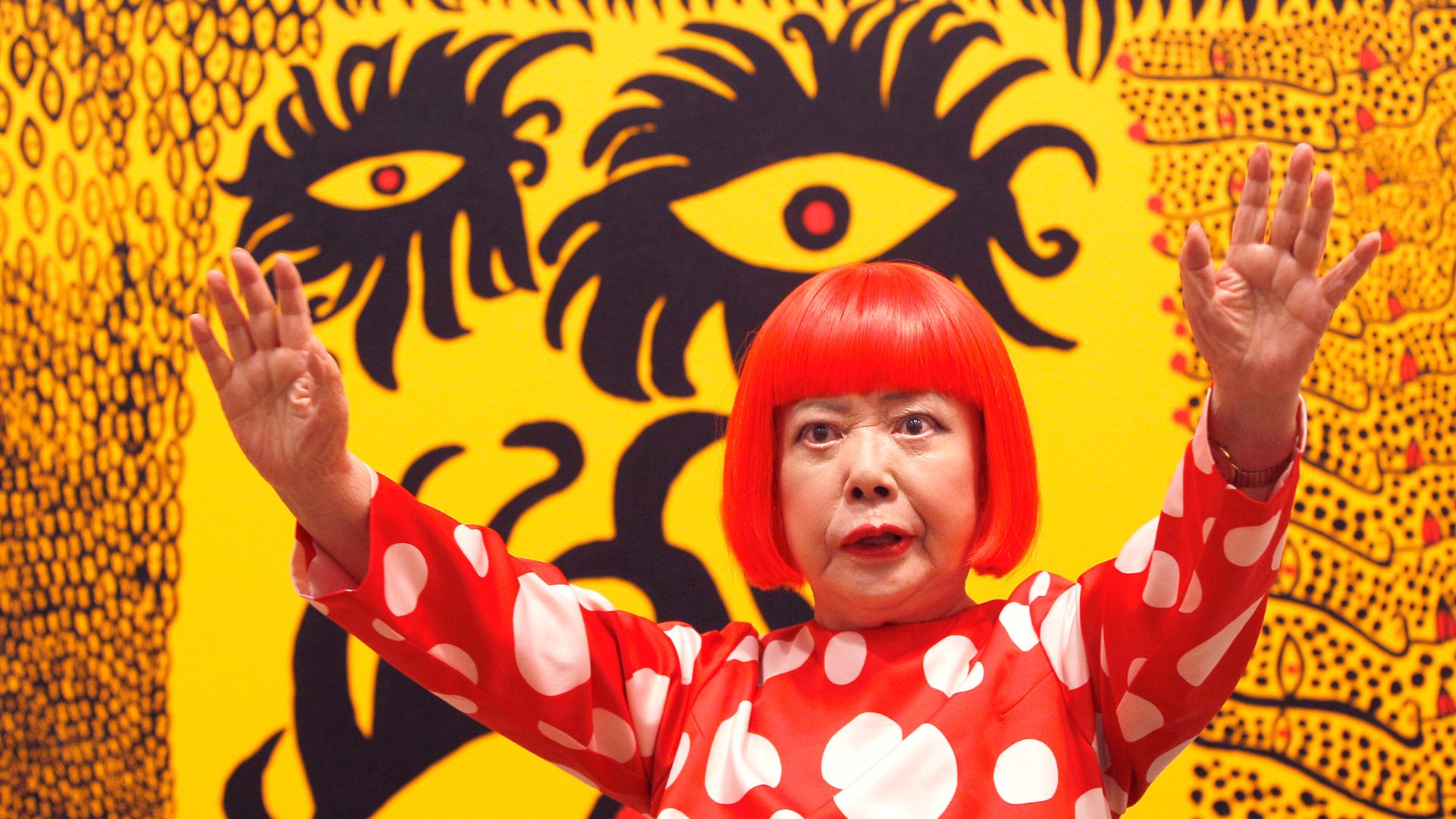
Iconic Artist Yayoi Kusama Dies at 97, Leaving Polka Dot Legacy
Renowned Japanese artist Yayoi Kusama, celebrated globally for her distinctive polka dot motifs, has passed away at the age of 97.
Yayoi Kusama, the visionary Japanese artist whose immersive installations and distinctive polka dot patterns captivated the global art world, has died at the age of 97. Kusama's death was announced by her foundation, marking the end of a prolific career that spanned over seven decades and challenged conventional artistic boundaries.
Kusama's work, characterized by its vibrant colors, repetitive motifs, and often hallucinatory qualities, gained international acclaim in the latter half of her life. She became particularly known for her "Infinity Mirror Rooms," enclosed spaces that reflect her signature polka dots endlessly, creating disorienting yet mesmerizing experiences for viewers. Her art explored themes of obsession, infinity, and the self, often drawing from her own psychological experiences.
The artist's signature polka dots, which she called "infinity nets" and "obliterating my ego," became her artistic trademark. These ubiquitous patterns adorned canvases, sculptures, and entire rooms, transforming mundane objects and spaces into surreal landscapes. Her career saw a significant resurgence in the 21st century, with major retrospectives held in prominent museums worldwide, drawing record crowds and solidifying her status as a contemporary art icon.
Kusama's passing leaves a void in the art community, but her enduring influence is evident in the countless artists she inspired and the widespread recognition of her unique aesthetic. Her work transcended traditional art forms, engaging with fashion, design, and popular culture, making contemporary art accessible to a broader audience.
Born in Matsumoto, Japan, Kusama began her artistic journey in the 1950s, moving to New York City in the late 1950s where she became a prominent figure in the avant-garde scene. She was associated with movements like Abstract Expressionism and Pop Art, though her style remained distinctly her own. Her early experiences and struggles in the art world, coupled with her ongoing battles with mental health, deeply informed her creative output.
Throughout her career, Kusama consistently pushed the envelope, creating works that were both deeply personal and universally resonant. Her installations often invited audience participation, further blurring the lines between art and life. The sheer scale and ambition of her projects, from large-scale outdoor sculptures to meticulously designed exhibitions, underscored her unwavering dedication to her artistic vision.
Her work often addressed her personal struggles with hallucinations and phobias, which she channeled into her art as a form of therapy and self-expression. The polka dots, for her, represented a way to obliterate her own identity and connect with the infinite universe. This profound connection between her inner world and her outward artistic expression became a hallmark of her legacy.
Kusama's impact extends beyond the gallery walls. Her distinctive style has influenced fashion designers, filmmakers, and musicians, demonstrating the pervasive reach of her artistic innovations. Her passing signifies the loss of one of contemporary art's most original and influential voices.
This article was written by AI based on publicly available news reporting. Original reporting by the linked source.