Ig Nobel Prizes Awarded for Cockroach Milk, Snake-Stepping, and Kissing Studies
The Ig Nobel Prizes honored bizarre scientific research, including cockroach milk, the physics of stepping on snakes, and the study of kissing.
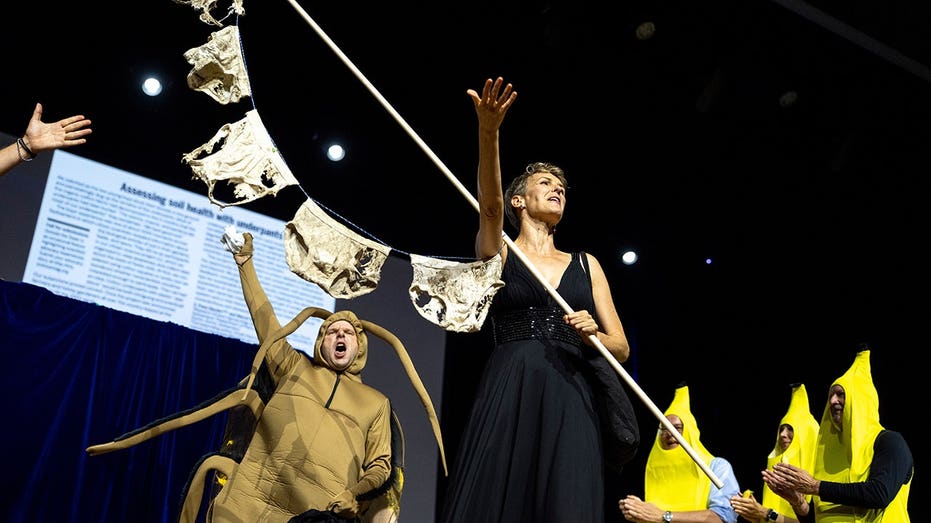
The 33rd annual Ig Nobel Prize ceremony, a playful celebration of unusual and imaginative scientific achievements, was held virtually and in person at Harvard University, honoring research that "first makes people laugh, and then makes them think." This year's awards recognized a diverse range of studies, from the nutritional content of cockroach milk to the biomechanics of stepping on venomous snakes.
The Ig Nobel Prizes, often seen as the anti-Nobel, aim to highlight scientific endeavors that might otherwise be overlooked. The awards are presented by the science humor magazine Annals of Improbable Research. This year's ceremony featured a cast of Nobel laureates and notable personalities, underscoring the event's unique blend of serious science and lighthearted presentation.
Among the honorees was the prize for Nutrition, awarded to researchers who analyzed the nutritional value of milk produced by the *Diploptera punctata* cockroach, often referred to as "cockroach milk." This protein-rich substance is considered a potential superfood, though its practical collection is challenging. The prize for Physics was given for a study investigating the physics of stepping on a cat, which explored the animal's ability to twist its body mid-air.
Another notable award, in the field of Zoology, recognized research into the behavior of praying mantises, specifically a study that examined whether a female praying mantis would eat its mate during copulation. The prize for Peace was awarded to scientists who studied the psychological effects of listening to the "Baby Shark" song on repeat, a study with clear implications for modern forms of torment.
The ceremony also celebrated research into the effectiveness of various methods for cleaning up oil spills, the aerodynamics of bumblebees, and the study of human kissing. One team received the award for Medicine for their work on the biomechanics of stepping on a snake, analyzing the forces and movements involved in such an encounter. The prize for Literature was awarded for a paper that reviewed 17 previous Ig Nobel Prize studies.
Past Ig Nobel Prizes have honored studies such as the aerodynamics of a tossed salad, the effect of music on drowning people, and the study of why people slip on banana peels. The awards consistently draw attention to the vast and often quirky spectrum of scientific inquiry, encouraging curiosity and a less conventional approach to research.
Organizers hope the prizes will inspire a new generation of scientists and researchers to pursue unconventional ideas. The ceremony, known for its elaborate skits and often nonsensical traditions, continues to be a highlight for those who appreciate the humor and wonder inherent in scientific exploration. The event concludes with the traditional paper airplane contest, a nod to the early days of the Ig Nobels.
While the research honored is often humorous, the underlying scientific questions are genuine, prompting further investigation and discussion. The Ig Nobel Prizes serve as a reminder that groundbreaking discoveries can emerge from the most unexpected places and from questions that initially seem absurd.
This article was written by AI based on publicly available news reporting. Original reporting by the linked source.