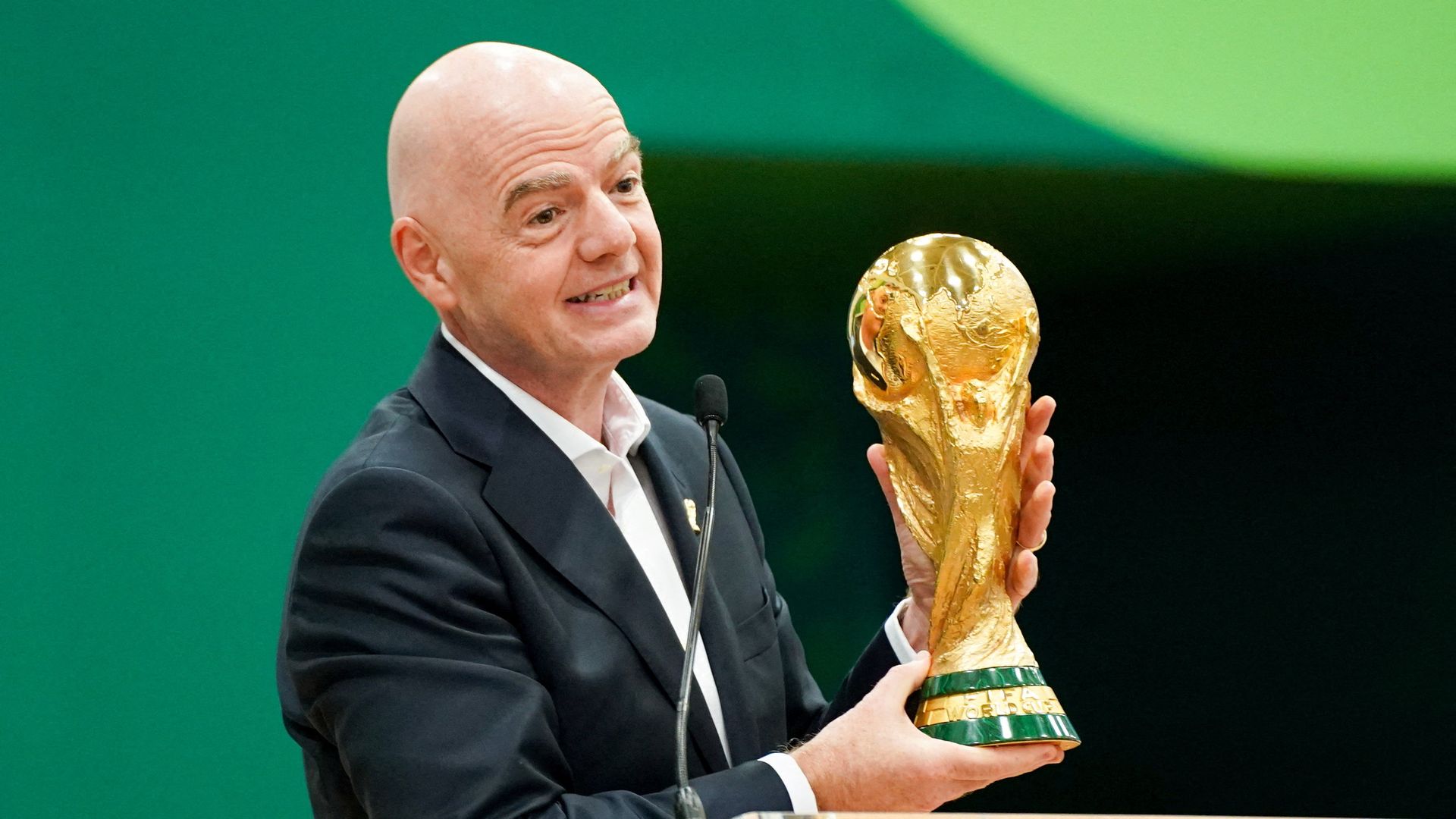
Infantino Calls World Cup Critics 'Consumed by Hate,' Denies False Rumors
FIFA President Gianni Infantino accused critics of the World Cup of being driven by hate and spreading false rumors.
FIFA President Gianni Infantino has launched an extraordinary online broadside against critics of the World Cup, accusing them of being "consumed by hate" and spreading "false rumours." The comments, made in a lengthy social media post, represent a sharp departure from the usual diplomatic tone adopted by the head of world football's governing body.
Infantino's remarks come amid ongoing scrutiny of Qatar's hosting of the tournament, which has faced criticism regarding human rights, labor conditions, and the country's social laws. FIFA has largely defended its decision to award the World Cup to Qatar, emphasizing the event's potential for positive change.
The FIFA president specifically targeted what he described as "strange disciplinary rulings" and "obsessions" that he believes have dominated the narrative surrounding the event. He suggested that these criticisms were not based on genuine concerns but on a pre-existing animosity towards FIFA and the World Cup itself.
His public statement signals FIFA's increasing willingness to engage directly with its detractors, moving beyond official press conferences and statements. This approach suggests a strategy to counter negative press more assertively, framing critics as biased rather than constructive.
Infantino did not name specific critics but alluded to a general pattern of negative reporting and commentary. He argued that the "world has been shown that things can be different" and that the tournament itself has been a success on the ground, despite the controversies. He suggested that the critics were ignoring the positive aspects of the event and the progress made by the host nation.
The FIFA president's strong language indicates a deep frustration within the organization regarding the persistent criticism. It also highlights a potential division between FIFA's internal assessment of the World Cup's success and the ongoing concerns raised by human rights organizations and some media outlets.
This public confrontation with critics is likely to amplify the debate surrounding the World Cup and FIFA's role in global football governance. It remains to be seen whether this aggressive stance will effectively quell criticism or further embolden opponents to scrutinize the event and FIFA's practices.
FIFA has historically faced challenges in balancing its commercial interests with the social and ethical considerations of hosting major tournaments. Infantino's latest comments underscore the high stakes involved and the organization's determination to protect its flagship event from perceived unfair attacks.
This article was written by AI based on publicly available news reporting. Original reporting by the linked source.