Iran damaged 20 US military sites; strikes more extensive than acknowledged
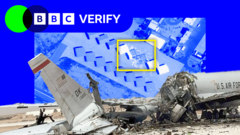
Satellite images reveal Iran damaged 20 US military sites across eight countries, exceeding official US acknowledgments.
Satellite images and videos analyzed by BBC Verify indicate that Iran has damaged 20 U.S. military sites across eight Middle Eastern countries since late February, suggesting the extent and precision of these attacks are greater than publicly acknowledged by American officials.
These strikes, occurring in retaliation for U.S.-Israeli operations, have targeted key facilities, causing significant damage to advanced air defense systems, refueling aircraft, and radar installations. The revelations come as Iran's Supreme Leader, Mojtaba Khamenei, has publicly asserted that Middle Eastern bases are no longer safe for American forces.
The BBC's analysis identified damage at facilities in Saudi Arabia, the United Arab Emirates (UAE), Qatar, Kuwait, Iraq, Jordan, Bahrain, and Oman. Among the most significant damages reported are to three state-of-the-art Terminal High Altitude Area Defense (THAAD) missile battery systems located at bases in the UAE and Jordan. The U.S. is known to operate only eight such THAAD batteries globally.
While the Pentagon has stated it has struck over 13,000 targets in Iran since the start of "Operation Epic Fury," analysts suggest the counter-attacks from Tehran have been more precise and widespread than the White House has indicated. The Pentagon has declined to comment on these findings, citing operational security.
In an effort to limit external analysis of the conflict, the U.S. reportedly requested Planet, a major satellite imagery provider, to impose an indefinite restriction on new images of Iran and much of the Middle East. Planet stated this measure was to prevent its imagery from being used by adversarial actors to target allied personnel and civilians.
Despite this restriction, BBC Verify utilized imagery from other international providers, combined with older archived images, to document the impacts of the Iranian strikes. Some analysts estimate the number of bases hit could be as high as 28, indicating a potentially broader campaign than currently understood.
The U.S. has sought to downplay the impact of Iranian attacks, with White House officials suggesting Iran's military capabilities have been significantly degraded. However, the evidence from satellite imagery challenges this narrative, pointing to a more potent and strategic Iranian response.
This detailed assessment raises questions about the effectiveness of U.S. defenses in the region and the true scale of Iranian retaliatory capabilities, particularly in light of the ongoing broader conflict involving Iran and its allies against Israel and its partners.
This article was written by AI based on publicly available news reporting. Original reporting by the linked source.