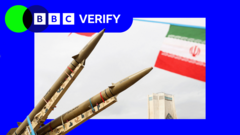
Iran Deal Revived: US, Iran Sign Accord Amid Nuclear, Sanctions Questions
A new US-Iran Memorandum of Understanding aims to de-escalate conflict, but faces scrutiny over nuclear program, sanctions, and Hormuz access.
President Donald Trump has officially signed a Memorandum of Understanding (MoU) with Iran, marking a significant shift following recent air strikes that initiated conflict on February 28, 2026. The 14-point agreement, intended to pave the way for discussions on Iran's nuclear weapons program, has drawn criticism for its contents and omissions, particularly concerning economic sanctions and access to the Strait of Hormuz.
This new accord inevitably invites comparisons to the 2015 Joint Comprehensive Plan of Action (JCPOA), an Obama-era deal that President Trump withdrew the U.S. from during his previous term. The JCPOA's primary objective was to impose strict limits on Iran's nuclear activities. It restricted Iran's nuclear material stockpile to 300kg and capped uranium enrichment at 3.67% for 15 years, a level insufficient for nuclear warheads but suitable for power generation.
The International Atomic Energy Agency (IAEA) had confirmed Iran's compliance with the JCPOA until the U.S. withdrawal in 2018. Following the collapse of that agreement, Iran significantly advanced its nuclear program. By the start of the recent conflict on February 28, 2026, U.S. officials estimated Iran held approximately 440kg of uranium enriched to 60%, a level that can be rapidly converted to the 90% purity required for weapons-grade material.
The implications of the new MoU are far-reaching. While the text, as shared with media, indicates Iran's reaffirmation of certain commitments, details regarding the lifting of economic sanctions and the critical issue of navigation rights through the Strait of Hormuz remain subjects of intense debate and scrutiny. The effectiveness of this deal in preventing future escalations hinges on the clarity and enforcement mechanisms surrounding these key provisions.
Prior to the recent conflict, Iran's nuclear program operated under the framework of the JCPOA, which limited its enriched uranium stockpile to 300kg and enrichment levels to 3.67% for 15 years. This structure was designed to ensure Iran's nuclear activities remained peaceful and allowed for IAEA inspections. However, the U.S. withdrawal in 2018 led to Iran's acceleration of its nuclear capabilities.
Satellite imagery has indicated damage to over 50 Iranian military bases following U.S. strikes since the conflict's onset. Concurrently, Iran has reportedly targeted 20 U.S. military sites. These actions underscore the volatile security environment in which the new MoU is being implemented.
Questions persist about the specific limitations placed on Iran's nuclear enrichment capabilities under the new agreement. Unlike the JCPOA's clear, quantitative restrictions, the current MoU's provisions on this front appear less defined, raising concerns among international observers about Iran's potential to pursue weapons-grade uranium.
Furthermore, the economic ramifications, particularly the potential easing of sanctions, are a critical component of the deal. The impact on global oil markets and Iran's ability to resume international trade is a significant factor influencing regional stability and international relations. The resolution of these issues will be crucial for the long-term success of the agreement.
This article was written by AI based on publicly available news reporting. Original reporting by the linked source.