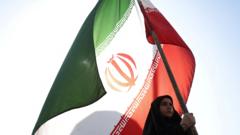
Iran frames US deal as victory amid economic pressure and internal dissent
Tehran portrays a new understanding with the US as a triumph, but faces internal criticism and economic hardship.
Iran's leadership is actively framing a recently reached memorandum of understanding (MoU) with the United States not as a concession, but as a testament to its resilience and a strategic victory. This narrative, however, faces significant challenges both domestically and internationally.
The country has recently endured a protracted period of economic strain, exacerbated by international sanctions. Furthermore, segments of the Islamic Republic's traditional support base have voiced strong opposition to any form of compromise with Washington over the past several months. Adding to the complexity, a segment of the Iranian population, both within the nation and abroad, views the current geopolitical climate as an opportunity for regime change rather than diplomatic engagement.
Senior Iranian officials have publicly characterized the emerging agreement as a success. Mohammad Bagher Qalibaf, the Speaker of Iran's parliament and a key figure in the negotiations, stated that Iran had advanced significantly towards ultimate victory. President Masoud Pezeshkian echoed this sentiment, describing the understanding as potentially transformative, suggesting its full implementation could address many of Iran's pressing issues and usher in a new era for the nation and the wider Middle East.
The involvement of Qalibaf is noteworthy, as he is not aligned with Pezeshkian's more moderate political faction. His public endorsement suggests the deal garners support from influential elements within the Iranian establishment, potentially including factions within the Islamic Revolutionary Guard Corps. This broad backing is crucial for the leadership's efforts to present the agreement as a unified national achievement.
Tehran's narrative of victory is also built on the argument that the US and Israel failed to achieve their primary objectives. According to this perspective, Iran was not forced into surrender, the Islamic Republic was not overthrown, its nuclear program was not dismantled through military means, and its ties with Hezbollah remain intact. Instead, Iran is still engaged in negotiations, with discussions including the inclusion of Lebanon and the potential for sanctions relief.
However, this official portrayal is met with considerable skepticism and outright criticism within Iran. Reports indicate that a hard-line Member of Parliament, who also serves as the deputy chair of the parliament's National Security Committee, has described the draft deal as a document that would effectively turn Iran into an American colony. This critic also alleged that negotiators disregarded the supreme leader's directive against reopening the Strait of Hormuz to maritime traffic.
Such criticism from within the political system carries significant weight, indicating that dissent is not confined to external opposition. It suggests a division within the establishment regarding the terms and implications of the agreement with the US. The intensity of this internal debate highlights the precarious position the Iranian leadership occupies as it attempts to consolidate support for the deal.
The ultimate success of Iran's efforts to frame this understanding as a victory will likely depend on the tangible benefits that accrue to the Iranian populace, particularly in terms of economic improvement and the easing of sanctions. The ongoing internal discourse and the reaction from international stakeholders will also play a crucial role in shaping the long-term perception of this diplomatic development.
This article was written by AI based on publicly available news reporting. Original reporting by the linked source.