Iran school strike killed 120 children; BBC visits site
A BBC visit to Iran's Shajareh Tayyebeh Primary School, struck during a war, reveals the devastating civilian toll of 120 children killed.
An ordinary Saturday morning in Minab, southern Iran, was shattered on February 28th when a strike on Shajareh Tayyebeh Primary School became one of the conflict's deadliest single incidents for civilians. The attack, occurring in the opening hours of a US-Israeli war with Iran, claimed the lives of 156 people, including 120 children, according to the Minab prosecutor's office. A pregnant woman and her unborn child were among the victims.
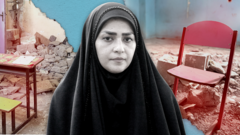
The school, a brightly painted building with distinct areas for boys and girls, is now a scene of devastation. Rubble marks where classrooms once stood, and broken concrete hangs precariously from the damaged upper floors. Amaineh Nademi, a 33-year-old teacher, walks through the ruins, recounting the moments before the strike and the profound sense of loss that still permeates the site.
Teachers at the school continue to pray at the site daily, and rescue workers are still searching for remains. Much of the upper floor, which housed the girls' classrooms, collapsed into the one below. "You can't call it a school," Amaineh stated, describing the remaining walls as smelling of "death, grief and the blood that was shed here."
Evidence suggests that US forces hit the school, which is located adjacent to an Islamic Revolutionary Guard Corps (IRGC) compound that satellite imagery indicates was struck multiple times. The US has not claimed responsibility for the strike on the school, though US media have reported that military investigators believe it was likely an unintentional action by US forces.
Iranian authorities facilitated the BBC's visit, presenting the school's destruction as evidence of the civilian cost of a campaign presented by Washington as targeting Iran's military and security apparatus. The stark reality at the school, however, points to a devastating impact on innocent lives.
On the day of the attack, the school day had begun as usual. In observance of Ramadan, children had gathered in the prayer hall for Quran recitations before classes commenced. Amaineh Nademi was preparing to teach her first-grade pupils a new letter of the Persian alphabet when the first explosions were heard.
As the initial attacks of the war unfolded, the headteacher announced the school would close, and teachers began alerting parents to collect their children. Amaineh noted that only five of her 15 first-grade students remained in her classroom on the upper floor when she heard the first explosion nearby. She rushed back for them, but before they could evacuate, a missile struck the school.
"Just as I went to leave, a missile struck the school," Amaineh recounted. "Something hit my head and my students' heads - we were all sent flying."
This article was written by AI based on publicly available news reporting. Original reporting by the linked source.