Iran Sends 3 Tankers Past US Blockade, Signaling Confidence in Deal
Three Iranian oil tankers, carrying 3.8 million barrels of crude, have passed a US blockade line, suggesting confidence a sanctions deal is imminent.
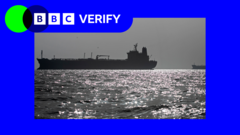
Three Iranian tankers loaded with crude oil have successfully passed the US blockade line in the Gulf of Oman, according to ship-tracking data. Two of the vessels, Hero II and Sonia I, broadcast their locations as they crossed the line early Wednesday morning, while a third, Diona, began transmitting its position just past the blockade shortly after. This move suggests Iran is acting with confidence that an expected sanctions relief deal with the United States is close to being finalized.
This development comes despite U.S. naval forces confirming that the blockade would remain in effect until a deal with Iran is signed, which is anticipated to occur in Switzerland on Friday. The tankers involved – Diona, Hero II, and Sonia I – are all owned by the National Iranian Tanker Company, an entity and its associated ships that have previously been sanctioned by the U.S. Treasury. Iran has been under long-standing U.S. sanctions due to concerns over its nuclear program, its support for groups designated as terrorist organizations by Washington, and alleged human rights violations.
Data from MarineTraffic indicates that Hero II and Sonia I departed from Iran's Chabahar port on Tuesday. The U.S. blockade line extends from the eastern tip of Oman to the Iranian coast. Maritime intelligence firm Windward reported that this is the first time these specific Iranian tankers have broadcast their locations since March. If they reach their destinations, these shipments would represent Iran's first oil exports in approximately two months, according to TankerTrackers.com.
The three ships are collectively carrying an estimated 3.8 million barrels of crude oil. Their planned destinations are not currently being broadcast. The U.S. blockade has significantly impacted Iran's crude exports, reducing them to approximately 260,000 barrels per day in May. This figure represents a sharp decline from the 2025 average of 1.67 million barrels per day, according to data from maritime intelligence firm Kpler.
Michelle Wiese Bockman, a senior analyst at Windward Maritime Intelligence, commented to BBC Verify that the tankers' actions are a "sign that Iran is confident the blockade is over, even if the US has insisted it will be in place until Friday." This suggests a potential divergence in perceived timelines or intentions between Tehran and Washington regarding the sanctions.
The U.S. Department of Defense has previously intercepted sanctioned tankers. One such vessel, the Tifani, was intercepted by U.S. forces more than ten days after it had departed the Gulf, highlighting the U.S. commitment to enforcing its sanctions regime.
The effectiveness of the U.S. blockade has been substantial, drastically curtailing Iran's oil revenue and its ability to engage in international trade. The reduction in exports has had a notable impact on Iran's economy, which is heavily reliant on oil sales.
As the expected Friday deadline for the signing of the deal approaches, the movement of these tankers raises questions about the precise terms of the agreement and the verification processes that will be in place. The situation underscores the intricate geopolitical dynamics at play in the region and the ongoing tension surrounding Iran's oil exports and its international relations.
This article was written by AI based on publicly available news reporting. Original reporting by the linked source.