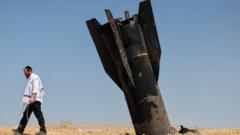
Iran Strikes Israel, Signaling Growing Resilience and New Red Lines
Iran launched missiles and drones at Israel, a move signaling increased resilience and a potential shift in its deterrence strategy.
Iran launched missiles and drones at Israel overnight, a significant escalation that, while appearing limited in immediate military impact, carries substantial political implications. This direct strike marks a departure from Iran's typical justification of retaliatory actions solely for attacks on its own territory, commanders, or interests.
For years, Tehran has generally responded directly to assaults on its soil. However, this latest action followed an attack on one of its allies, specifically a Hezbollah-linked building in southern Beirut. The decision to strike, despite the risk of renewed Israeli military action and potential disruption to fragile peace negotiations with the United States, raises questions about Iran's evolving strategic calculations.
Sources suggest that Iran's leadership may perceive a strengthened sense of resilience. Despite facing considerable military pressure from Israel and the U.S., economic sanctions, and a naval blockade, the Islamic Republic's state structures and security apparatus have remained intact, without the widespread uprisings predicted by some opponents.
This perceived resilience may have altered Tehran's risk assessment. Instead of viewing itself as a vulnerable entity avoiding confrontation, Iran might now see itself as a power that has weathered significant challenges and is capable of enforcing new boundaries. The strike could be interpreted less as simple retaliation and more as a strategic signal of deterrence.
Tehran may be communicating that assaults on its regional allies will now be considered as direct attacks on Iran itself. This message is particularly relevant for groups like Hezbollah, Iraqi militias, and other components of Iran's regional network, collectively known as the Axis of Resistance. The credibility of Iran's influence within this network is partly contingent on the belief that it will provide support.
While Iran's military stated on Monday that it would cease further strikes on Israel, the initial decision to launch the attack underscores a potential shift in the regime's foreign policy calculus. The long-term consequences for regional stability and international relations remain to be seen.
Experts suggest that Iran's leadership might be testing the boundaries of international tolerance and the resolve of its adversaries. The move could be an attempt to project strength and deter future attacks by demonstrating a willingness to respond directly to actions affecting its allies.
The incident also highlights the complex web of proxy relationships and regional rivalries that define the Middle East. The interconnectedness of these conflicts means that actions taken against one party can have far-reaching repercussions for others, potentially drawing more actors into direct confrontation.
This article was written by AI based on publicly available news reporting. Original reporting by the linked source.