US, Iran Exchange Middle East Strikes for Second Day
The US and Iran engaged in retaliatory strikes across the Middle East for a second consecutive day, escalating regional tensions.
The United States and Iran have exchanged military strikes across the Middle East for a second consecutive day, intensifying regional tensions and further destabilizing a fragile ceasefire.
US Central Command (Centcom) announced it had conducted a series of self-defense strikes against military, surveillance, and radar sites located in southern Iran. This action followed statements by President Donald Trump indicating a strong US response to recent actions by Tehran and urging an end to the conflict.
In response, Iran's Islamic Revolutionary Guard Corps (IRGC) reportedly launched strikes targeting US military assets throughout the region. State media reported that bases in Bahrain and Kuwait came under Iranian fire for the second day in a row. The IRGC also claimed to have fired ballistic missiles at a US command center in Jordan, alleging the destruction of numerous US fighter jets and facilities, though these claims remain unverified.
The exchange of fire has raised concerns about broader regional stability and the potential impact on international shipping lanes. The immediate implications include heightened military alert levels and a potential increase in oil prices due to the perceived threat to crucial trade routes.
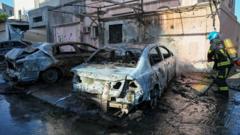
Bahrain's Interior Ministry confirmed that its air raid sirens were activated and that shrapnel from intercepted Iranian drones caused damage to homes and vehicles in the capital, Manama, and Hamad Town. An 11-year-old girl sustained a minor injury, with the ministry condemning Iran's actions.
Kuwait's Army reported that its air defense systems intercepted hostile aerial targets and that the country temporarily closed its airspace due to the Iranian attacks. The airspace was reopened early Thursday.
In Iran, state media reported explosions in and around Tehran, the port city of Bandar Abbas, and other southern areas near the Strait of Hormuz. The IRGC also claimed to have struck two oil tankers transiting the vital shipping channel, shortly after state media announced its complete closure to all vessel types. However, there has been no independent confirmation of a strike on the tankers.
Centcom, however, stated that commercial ships were continuing to navigate in and out of the Strait of Hormuz. The reported closure of the shipping channel and the alleged attack on the tankers led to a notable increase in oil prices, with Brent crude climbing to approximately $95 a barrel.
This article was written by AI based on publicly available news reporting. Original reporting by the linked source.