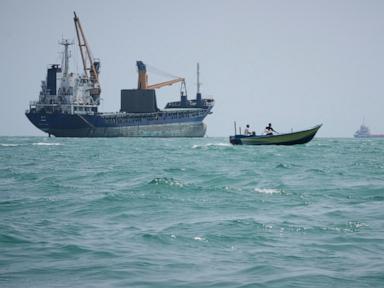
Iran to Establish New 'Restricted Zone' Outside Strait of Hormuz
Iran plans to designate a new 'restricted zone' outside the Strait of Hormuz, with ships violating it facing sanctions, an official announced.
Iran announced Sunday its intention to establish a new "restricted zone" in waters outside the strategic Strait of Hormuz, a move that could further escalate tensions in the vital global shipping lane.
Mohsen Rezaei, the secretary of Iran's Supreme National Security Council, stated that the zone would be formally announced in the coming days. Ships found to be in violation of this new maritime area would face sanctions, according to comments carried by Iranian state media. The Strait of Hormuz, a narrow waterway connecting the Persian Gulf to the open ocean, is a critical chokepoint for global oil transport, with a significant portion of the world's crude oil passing through it daily.
This development comes amid ongoing exchanges of strikes between Iran and the United States, with the Strait of Hormuz frequently serving as a primary flashpoint. The region has seen increased military activity following major combat operations announced by the U.S. against Iran in February. Delegations from both nations have been engaged in negotiations since June, aiming for a war-ending agreement based on a prior memorandum of understanding, though direct confrontations have persisted.
The announcement of the restricted zone appears to be a direct response to escalating rhetoric and actions. Earlier in August, U.S. President Donald Trump declared the U.S. would launch a "crushing economic operation" to force Iran's submission. In response to threats from U.S. Secretary of Defense Pete Hegseth to sink Iranian oil tankers, Mohammad Bagher Ghalibaf, speaker of the Iranian parliament, stated that Iran could target U.S. oil facilities, emphasizing the interconnectedness and vulnerability of oil infrastructure in the region.
Further complicating the situation, overnight Israeli strikes in southern Lebanon resulted in at least 11 deaths, including two children, according to Lebanese state media. These strikes targeted the town of Kfar Rumman, with nine killed in an airstrike on a residential building and two in a drone strike on a car. The Israeli military has not commented on these specific incidents, though they did issue an evacuation warning ahead of a strike in another southern Lebanese town.
In parallel diplomatic efforts, Iranian Foreign Ministry spokesperson Esmaeil Baqaei reported that a Qatari delegation visited Iran on Sunday to aid in de-escalation. This follows a recent visit by an Iranian technical delegation to Qatar, indicating ongoing attempts to manage regional tensions through dialogue, even as military actions continue.
Rezaei's statement about the new zone, while brief, suggests Iran is preparing to assert greater control or influence over maritime traffic in its vicinity. The specific parameters of the "restricted zone" and the nature of the sanctions remain unclear, leaving room for interpretation and potential further friction.
The situation remains fluid, with the potential for miscalculation high in the contested waters. The effectiveness and enforcement of Iran's planned restricted zone, alongside the broader U.S.-Iran conflict and regional instability, will be closely watched by the international community and global energy markets.
This article was written by AI based on publicly available news reporting. Original reporting by the linked source.