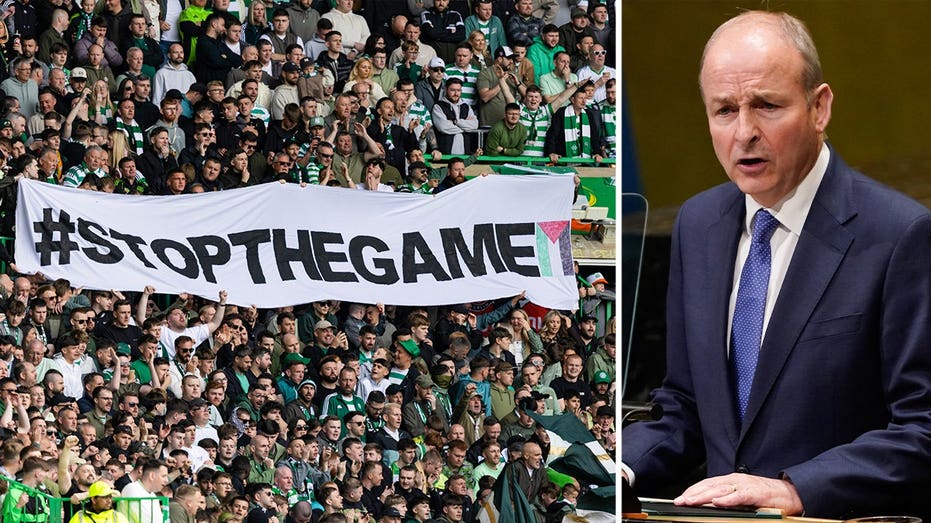
Irish PM Martin Denies Antisemitism Claims Over Israel Game Boycott Vote
Irish Prime Minister Micheál Martin rejected antisemitism accusations as his government faced a vote on boycotting an Israel game, highlighting political divisions.
Irish Prime Minister Micheál Martin has strongly refuted claims of antisemitism leveled against Ireland amid a contentious political debate surrounding a potential boycott of a football match involving Israel.
The controversy erupted as the Irish government was set to vote on a motion that could lead to the boycotting of an upcoming UEFA U-21 Championship qualifier match between the Republic of Ireland and Israel. The motion, brought forward by opposition parties, cited the ongoing conflict in Gaza as the reason for the proposed boycott.
Martin stated that the government's stance was not rooted in antisemitism but was a reflection of deep concern over the humanitarian situation in Gaza. He emphasized that Ireland's position on the conflict is based on international law and a desire for peace, not prejudice against any religious group. The Prime Minister's office indicated that the government would not support a boycott, distinguishing between a political stance on the actions of a state and animosity towards its people or religion.
The debate underscores the complex geopolitical sensitivities surrounding the Israeli-Palestinian conflict, with significant divisions emerging within Irish politics. While some lawmakers have pushed for a symbolic boycott as a form of protest against Israeli actions, the government has maintained a more diplomatic approach, prioritizing engagement and adherence to international norms.
Opposition TDs (Teachtaí Dála, members of parliament) who supported the boycott motion argued that it was a necessary step to signal disapproval of the violence and its impact on civilians. They suggested that failing to act would be a tacit endorsement of the ongoing conflict. The motion aimed to pressure the Football Association of Ireland (FAI) to withdraw from the match, scheduled for March 2023.
However, the government's position, articulated by Martin, stressed that such boycotts could be counterproductive and potentially foster a climate where legitimate criticism of state actions could be misconstrued as prejudice. The Prime Minister reiterated his condemnation of Hamas and emphasized the need for a two-state solution and lasting peace in the region.
This situation highlights a broader challenge faced by many nations: balancing solidarity with populations affected by conflict with avoiding the appearance of religious or ethnic bias. The Irish government's decision to oppose the boycott reflects a careful navigation of these sensitive issues, seeking to uphold human rights concerns without alienating any community or violating sporting regulations.
As the vote proceeded, the discourse around the motion brought to the fore the deeply held views on the conflict within Irish society and its political landscape. The government's rejection of the boycott, coupled with its condemnation of antisemitism, aimed to draw a clear line between political dissent and discriminatory sentiment.
This article was written by AI based on publicly available news reporting. Original reporting by the linked source.