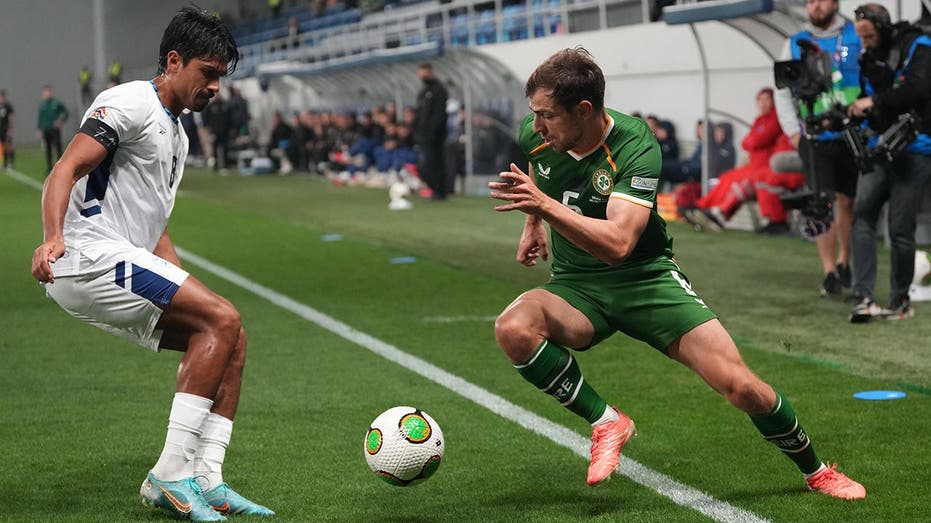
Israeli players wear armbands; Irish opponents refuse to honor terror victims
Israeli soccer players donned armbands to mourn terror attack victims, while their Irish counterparts declined a similar gesture.
Israeli national soccer team players wore black armbands during a recent match to commemorate victims of a devastating terror attack. The gesture aimed to honor those lost in the violence that has gripped the region.
This act of remembrance comes amidst heightened international scrutiny and pressure on sporting bodies and teams regarding the ongoing conflict. The decision by the Israeli team to wear the armbands was approved by UEFA, the governing body for European football.
The Irish team, facing the Israeli national squad in a Nations League fixture, reportedly declined to participate in a moment of silence or wear similar armbands. This stance has drawn attention and criticism, particularly as UEFA had approved the armbands for the Israeli team.
The decision by the Irish team to not honor the victims of the terror attack raises questions about the politicization of sports and the role of international sporting events in addressing sensitive geopolitical issues. It highlights the complex and often controversial intersection of sports and global politics.
Reports indicate that an Irish soccer official had a contentious exchange with an Israeli journalist prior to the match, further underscoring the tense atmosphere surrounding the fixture. The journalist reportedly questioned the official about the team's stance on honoring the victims.
UEFA's approval of the armbands for the Israeli players signals a willingness by the governing body to allow for expressions of remembrance in the context of international competitions, even amid political sensitivities. However, the Irish team's refusal to reciprocate creates a stark contrast in how the two nations' sporting bodies are engaging with the tragedy.
This situation is not unprecedented, as international sporting events have frequently become platforms for political statements or boycotts. The pressure on the Irish team to potentially boycott the matches against Israel had been significant, indicating the broader political climate influencing these sporting encounters.
The differing responses from the two teams leave unresolved questions about how international sports organizations will navigate such politically charged situations in the future and the expectations placed upon athletes and officials to acknowledge or engage with global events.
This article was written by AI based on publicly available news reporting. Original reporting by the linked source.