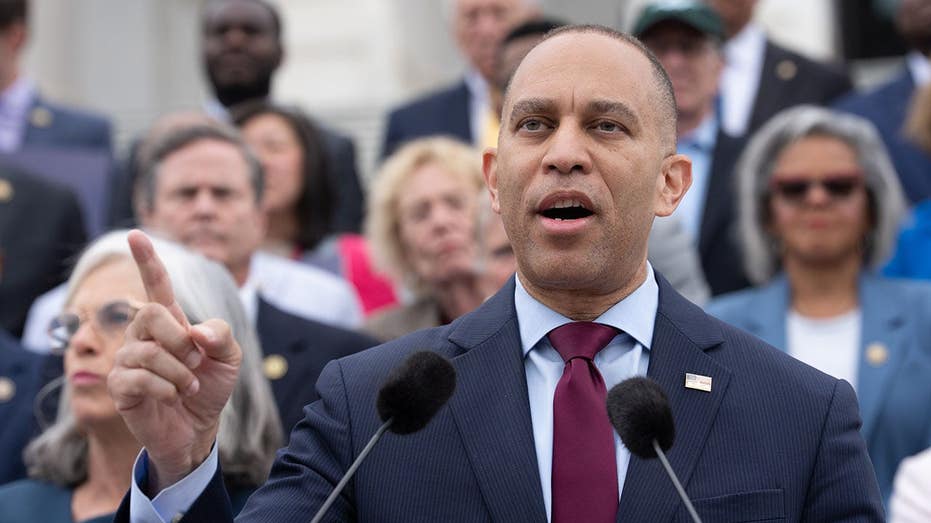
Jeffries embraces socialist nominees, sparking party division and criticism
House Minority Leader Hakeem Jeffries faces backlash for supporting Democratic Socialists, with critics arguing it reveals the party's true direction.
House Minority Leader Hakeem Jeffries has drawn significant criticism for his embrace of nominees backed by the Democratic Socialists of America (DSA), a move that some within the party believe signals a shift in its ideological identity.
This development comes as several candidates with DSA affiliations have achieved notable successes in recent primary elections. The endorsement and support from prominent Democratic figures, including Jeffries, have amplified concerns among moderate Democrats and political opponents about the party's perceived move towards more progressive and socialist policies.
Critics argue that Jeffries' actions effectively welcome these socialist-aligned candidates into the broader Democratic "fold." They contend that this strategy is not only a strategic misstep but also a clear indication of the Democratic Party's willingness to align with a platform that is increasingly being characterized as far-left by its detractors. This has led to accusations that the party is "revealing exactly who it is" to the electorate.
The backlash suggests a growing internal tension within the Democratic Party, balancing the desire to mobilize progressive voters with the need to appeal to a wider, more centrist electorate. The embrace of DSA-backed candidates by party leadership is seen by some as a gamble that could alienate swing voters in the general election.
While Jeffries and other proponents may view this as a necessary step to energize the party's base and push for policy advancements, opponents are leveraging these endorsements to paint the Democratic Party with a broad socialist brush. This tactic aims to highlight the perceived radicalism of certain elements within the party, potentially influencing voter perceptions and electoral outcomes.
The strategic decision to align with or support candidates who openly identify with socialist ideologies raises questions about the future direction of the Democratic Party's platform and its electoral coalition. It forces a public reckoning with the party's ideological boundaries and its appeal to different segments of the American electorate.
Further analysis will likely focus on how these endorsements play out in upcoming elections and whether the party can effectively navigate the internal debates and external criticisms stemming from this ideological alignment. The impact on voter turnout and the perception of the Democratic Party among independent voters remains a key question.
The ongoing debate underscores the complex political landscape and the challenges party leaders face in unifying diverse factions while presenting a cohesive message to the public.
This article was written by AI based on publicly available news reporting. Original reporting by the linked source.