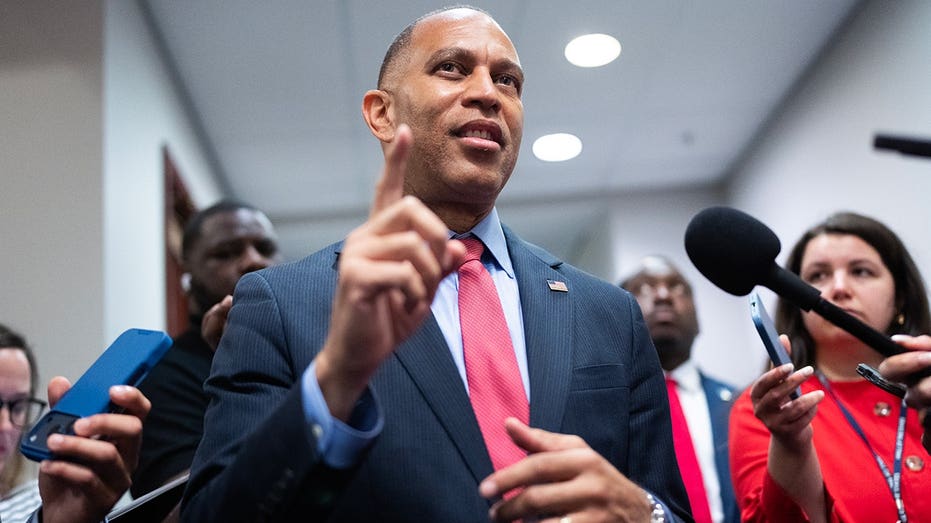
Jeffries Rejects Medicare for All, DSA Agenda; Khanna Prioritizes Healthcare
Hakeem Jeffries distanced himself from Medicare for All and the DSA agenda, while Ro Khanna emphasized healthcare as a top priority.
House Minority Leader Hakeem Jeffries has publicly distanced himself from the "Medicare for All" proposal and the broader agenda associated with the Democratic Socialists of America (DSA).
Jeffries, speaking on NBC's "Meet the Press," articulated his position on key progressive policies, signaling a potential divergence within the Democratic party on healthcare and economic issues.
His remarks came as Representative Ro Khanna, a prominent progressive voice, highlighted healthcare as the "most important priority" for the nation. While not directly contradicting Jeffries, Khanna's emphasis underscores a different set of urgent concerns for some members of the Democratic caucus.
Jeffries' rejection of "Medicare for All," a single-payer healthcare system, aligns with a more moderate faction of the Democratic party that favors strengthening and expanding the existing Affordable Care Act. This approach seeks to build upon current structures rather than implement a complete overhaul.
The Democratic Socialists of America (DSA) have been a vocal advocate for policies like "Medicare for All" and significant expansions of social programs. Jeffries' explicit separation from this agenda suggests an effort to appeal to a broader electorate and to moderate the party's public image.
Khanna's consistent advocacy for universal healthcare access, often framing it as a moral imperative, places him at the forefront of the party's progressive wing. His focus on this issue suggests it will remain a central point of debate and policy push within Democratic circles.
The differing stances highlight the ongoing internal discussions within the Democratic party regarding the best path forward on healthcare and economic policy. As the party looks towards future elections, these policy debates are expected to shape its platform and appeal to various voter demographics.
These contrasting views on core policy issues underscore the diverse ideological landscape within the Democratic party, with leaders navigating between progressive ideals and pragmatic approaches to governance and electoral strategy.
This article was written by AI based on publicly available news reporting. Original reporting by the linked source.