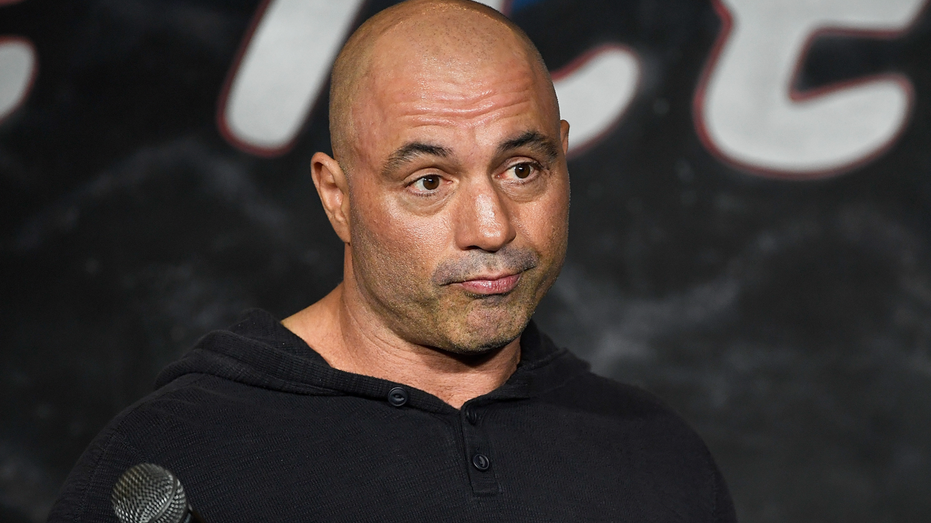
Joe Rogan Warns: 'Woke' Ideology Replaces God for Left, Enters Christianity
Joe Rogan expressed concern that 'woke' ideology is supplanting religious faith for some on the left and is now influencing Christianity.
Podcast host Joe Rogan has voiced concerns that the ideology often referred to as 'woke' is increasingly replacing traditional religious faith, particularly on the political left. Rogan suggested during a recent discussion that this secular ideology has become a primary focus for some, effectively taking the place that God or religious doctrine might have held.
This observation comes amid ongoing cultural debates about social justice, identity politics, and their intersection with established institutions, including religious organizations. Rogan's comments highlight a perception that certain progressive social viewpoints are being elevated to a level of almost unquestionable dogma, mirroring the function of religious tenets for believers.
Rogan elaborated on his view, stating that "woke" principles are not only filling a spiritual void for some but are also beginning to permeate and alter Christian communities. He implied that the emphasis is shifting from traditional theological concerns to contemporary social and political agendas within some religious contexts.
The implications of this perceived shift could be significant for both secular and religious discourse. If 'woke' ideology is indeed becoming a de facto belief system for a segment of the population, it raises questions about how societal values are formed and transmitted. For religious institutions, the integration or influence of such ideologies could lead to internal divisions or a redefinition of their core messages.
Rogan's remarks reflect a broader conversation about the changing landscape of belief and values in contemporary society. As traditional religious adherence declines in some regions, new frameworks for understanding morality and social order emerge. The term 'woke,' while often used pejoratively, broadly refers to an awareness of social injustices and systemic inequalities.
Commentators have noted that the tension between progressive social activism and traditional religious teachings is a recurring theme. Some argue that religious traditions have always adapted to societal changes, while others express concern that certain modern ideologies may be incompatible with foundational religious principles.
The podcast host's commentary has drawn attention from various cultural and religious observers. While some may agree with his assessment of a growing ideological influence, others might dispute the extent to which 'woke' principles are replacing or fundamentally altering religious faith, suggesting that these are complex and evolving dynamics.
Ultimately, Rogan's statements invite further discussion on the relationship between secular ideologies, cultural shifts, and the future of religious and moral frameworks in society. The extent to which 'woke' ideology is truly supplanting religious belief or merely interacting with it remains a subject of ongoing debate and observation.
This article was written by AI based on publicly available news reporting. Original reporting by the linked source.