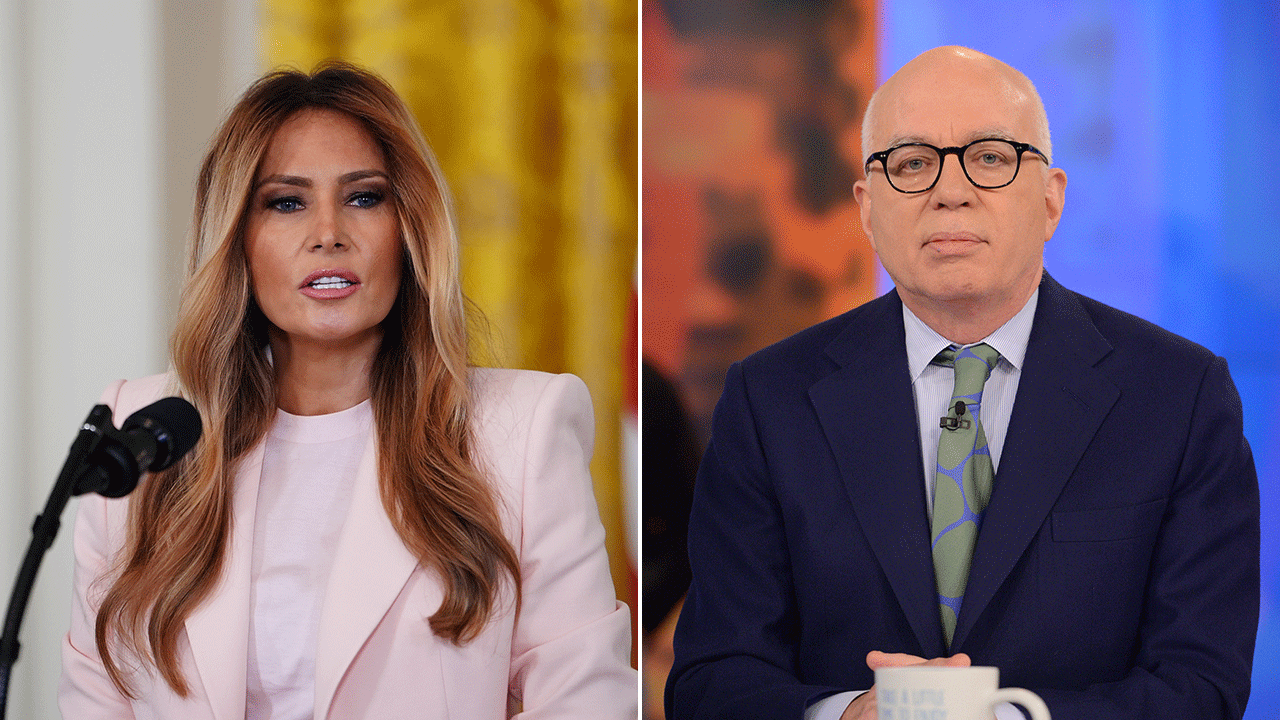
Judge Dismisses Michael Wolff's Lawsuit Against Melania Trump, Citing 'Contorted' Legal Arguments
A judge threw out Michael Wolff's lawsuit against Melania Trump, calling his legal claims 'contorted' and misapplied to court procedures.
A federal judge has dismissed author Michael Wolff's lawsuit against former First Lady Melania Trump, deeming the legal arguments presented as "contorted" and not aligned with how legal proceedings function.
The lawsuit, filed in December, stemmed from Wolff's attempt to seek damages from Trump over her alleged role in an endorsement deal that he claimed diluted his own book's success. Wolff had accused Trump of interfering with his endorsement agreement for his 2022 book, "This Will Not Pass: Trump, Winter and the White House," which he co-authored with New York Times reporter Alex Burns.
U.S. District Judge J. Paul Oetken, in a ruling on Monday, stated that Wolff's claims were "not how courts work" and that the author had fundamentally misunderstood the legal framework for such disputes. The judge emphasized that Wolff's legal theories were not supported by established case law or statutory provisions.
Wolff had alleged that Trump's endorsement of a different book, "The Truth About the Trump-Russia Dossier" by Julia Ioffe, interfered with his own lucrative endorsement opportunities. He sought to recover the profits he believed he lost due to Trump's actions, arguing that her endorsement of Ioffe's book was a breach of a supposed agreement.
In his ruling, Judge Oetken found Wolff's legal arguments to be legally insufficient. The judge specifically pointed to the fact that Wolff was attempting to use a tortious interference claim in a manner that was not recognized by the courts. Wolff's attempt to sue for economic interference based on a third-party endorsement deal was seen as a stretch of legal precedent.
The dismissal marks a significant setback for Wolff, who has previously authored other controversial books about the Trump administration, including "Fire and Fury." His legal team had argued that Trump's actions were deliberate and caused him substantial financial harm, but the court found no legal basis for these assertions.
This ruling underscores the high bar plaintiffs must clear when alleging tortious interference, particularly when the alleged interference involves complex endorsement deals and public figures. The court's decision highlighted that Wolff failed to demonstrate a legally cognizable claim for the damages he sought.
It remains to be seen whether Michael Wolff will attempt to appeal this decision or pursue the matter in a different legal venue. However, the judge's strong language suggests that any future attempts based on similar arguments would face considerable challenges.
This article was written by AI based on publicly available news reporting. Original reporting by the linked source.