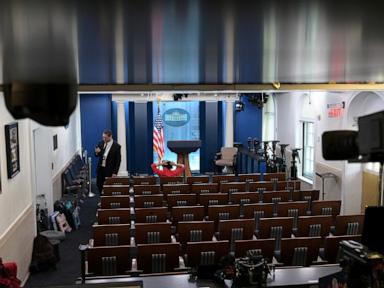
Judge Kelly Concludes Trump Media Ban Hearing Without Ruling
A federal judge heard arguments on President Trump's White House media ban, suggesting the administration's case was weak but issuing no immediate decision.
U.S. District Court Judge Tim Kelly concluded a hearing Wednesday on the constitutionality of President Donald Trump's decision to ban three news organizations from the White House, offering no immediate ruling but expressing skepticism about the administration's legal justification.
Kelly stated he would consider the arguments presented by attorneys for both sides and aim to provide a decision as soon as possible. The hearing addressed the lawsuit filed by CNN, MSNOW, and Politico, which sought a temporary restraining order to reinstate their reporters' access to the White House complex after the ban was implemented late last week.
In their legal filing, the news organizations characterized President Trump's action as a "direct assault on the First Amendment" and a "blatant violation of our most fundamental constitutional principles." President Trump had previously stated on social media that news outlets should not be permitted to report "FICTION and LIES" when covering him or the United States. He later added that the ban was not an assault on the free press but rather on "FAKE NEWS," which he claimed posed a national security threat.
The Department of Justice, defending the ban, cited specific stories from each outlet that they alleged violated standards of professionalism and decorum. These included claims of "trafficking in verifiable falsehoods about national security and other issues, and publishing sensitive or classified information."
Ted Boutrous, representing the news organizations, argued that some of the White House's cited stories were outdated and that reporters who wrote them had subsequently had their access renewed. He described the ban as a "cowardly act by the administration to mask Trump's real motive." Boutrous asserted that the administration had failed to provide justification for the ban, calling their arguments a "textual post hoc effort to justify just a blatant violation of due process."
Boutrous further contended that President Trump himself served as the "lead witness" in the case, as his public statements consistently indicated the ban was based on the coverage being too negative. He pointed to Trump's repeated declarations via social media and in the Oval Office that the ban was a response to unfavorable reporting, arguing this demonstrated the ban was "viewpoint and content-driven."
The administration's defense, as presented in court filings, argued that access to the White House press corps is a "privilege," not a right, and that the ban was implemented due to national security concerns and the publication of sensitive information. This stance contrasts with the media outlets' assertion that the ban infringes upon First Amendment rights and due process.
This legal challenge highlights a significant tension between the executive branch's asserted authority to manage White House access and the press's constitutional protections. The outcome of Judge Kelly's deliberation could set a precedent for how presidential authority interacts with the freedom of the press in the digital age.
This article was written by AI based on publicly available news reporting. Original reporting by the linked source.