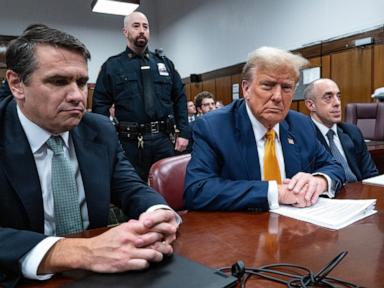
Judge Denies Trump's Second Bid to Move Hush Money Case to Federal Court
A federal judge rejected Donald Trump's second attempt to move his criminal hush money case to federal court, upholding his state conviction.
A federal judge on Friday once again rejected former President Donald Trump's effort to transfer his criminal hush money case from state to federal court, a move that could have potentially vacated his conviction.
Judge Alvin Hellerstein ruled that the grounds presented by Trump's legal team were neither new nor legally sufficient, stating he had failed to demonstrate good cause and diligence for the transfer.
Trump was convicted on 34 felony counts of falsifying business records concerning a $130,000 payment made to adult film actress Stormy Daniels, whose legal name is Stephanie Clifford. He is currently appealing this conviction.
The decision follows a previous denial and a subsequent order from a federal appeals court for Hellerstein to reconsider the removal attempt in light of the U.S. Supreme Court's recent immunity ruling. However, Hellerstein reaffirmed his initial decision, stating, "The president's motion is denied."
Trump's attorneys had argued that the Supreme Court's 2024 presidential immunity decision, which grants broad protections for official acts, should render some of the evidence and testimony used in the prosecution's case inadmissible. This argument was central to their second attempt to move the case.
The Manhattan District Attorney's office has been challenging Trump's appeal of his 2024 conviction. The legal strategy to move the case to federal jurisdiction was seen as a potential avenue to overturn the state-level verdict.
This latest ruling means Trump's conviction on state charges remains in place, and his appeal will proceed within the state court system. The legal team for the former president has indicated their intention to appeal Judge Hellerstein's latest decision.
The case, which concluded with Trump's conviction in May 2024, centered on allegations that the hush money payment was improperly recorded as a business expense to conceal its true purpose, thereby violating election laws.
This article was written by AI based on publicly available news reporting. Original reporting by the linked source.