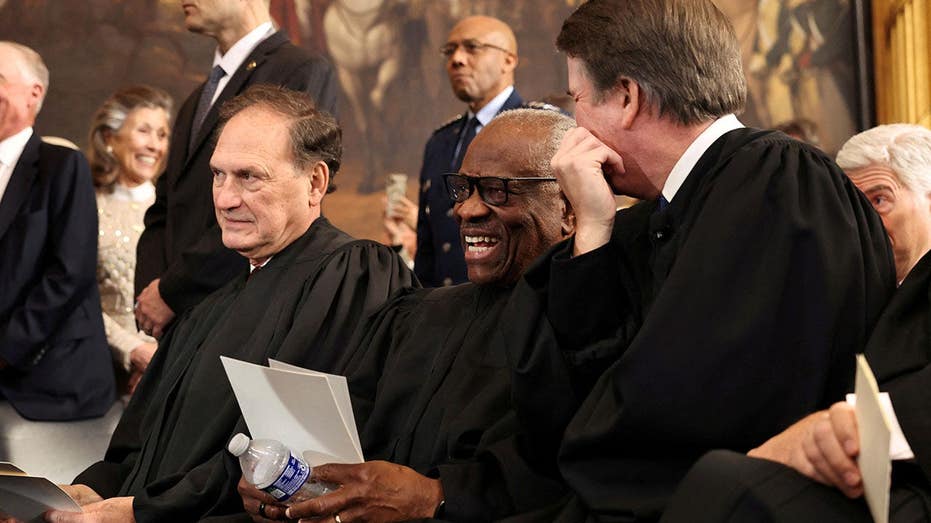
Justice Thomas: Alito found me 'scary' at Yale Law School
Justice Clarence Thomas revealed Justice Samuel Alito found him intimidating during their time at Yale Law School, explaining their lack of friendship.
Supreme Court Justice Clarence Thomas has shed light on why he and Justice Samuel Alito, despite serving together on the nation's highest court, were not friends during their time at Yale Law School. Thomas recounted that Alito found him "scary" during their formative years at the prestigious institution.
Thomas made the remarks during a recent event, offering a personal anecdote that explains the dynamic between the two justices during their law school tenure in the early 1970s. Both justices attended Yale Law School, a period when they were forming their professional identities and navigating the complexities of legal education.
According to Thomas, the reason for their distant relationship was Alito's perception of him. Thomas recalled Alito's statement, "Clarence, you were scary." This observation apparently contributed to Alito's hesitance to engage with Thomas, thereby preventing the development of a personal friendship.
The revelation offers a unique glimpse into the personal interactions of Supreme Court justices before their ascent to the bench. It highlights how individual perceptions and personalities can shape relationships, even among individuals who later share significant professional responsibilities.
While both justices have served on the Supreme Court since their appointments—Alito in 2006 and Thomas in 1991—this anecdote suggests their paths did not cross socially during their academic careers. Thomas is known for his conservative judicial philosophy and his unique background, having grown up in rural Georgia. Alito, also a conservative, came from a working-class Italian-American family in New Jersey.
Thomas's willingness to share such a personal detail underscores a rare moment of candor about his past interactions. It provides context for the professional, rather than personal, relationship that has characterized their time on the Supreme Court.
Neither justice has elaborated further on this specific interaction publicly. The remarks offer a personal footnote to the careers of two influential figures in American law, suggesting that perceived intimidation played a role in their early interactions at Yale.
This insight into their past does not appear to affect their current professional collaboration on the Supreme Court. Both justices continue to be key voices in the court's conservative majority, contributing to landmark decisions.
This article was written by AI based on publicly available news reporting. Original reporting by the linked source.