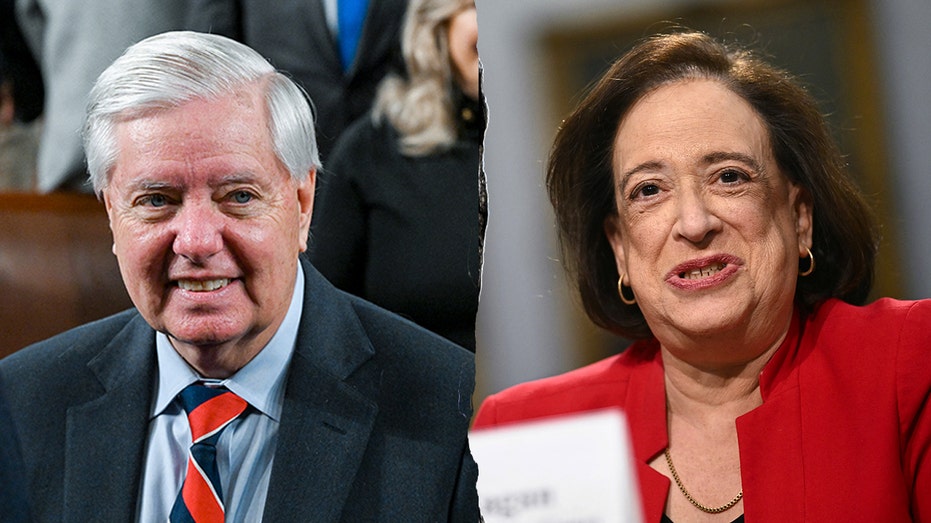
Kagan Recalls Graham's Vote Aiding Her Supreme Court Confirmation
Justice Elena Kagan acknowledged Senator Lindsey Graham's crucial vote in her 2010 Supreme Court confirmation, highlighting his support.
Supreme Court Justice Elena Kagan, speaking at an event, recalled the significant role Senator Lindsey Graham played in her 2010 confirmation to the nation's highest court. Graham, a Republican, was one of only three senators from his party to vote in favor of Kagan's nomination.
Kagan's confirmation process was largely bipartisan, with a final vote of 67-33. However, the support from a Republican senator like Graham was considered noteworthy at the time and remains a point of discussion regarding judicial appointments. Graham's vote was seen by many as an indication of his willingness to cross party lines on judicial nominees he deemed qualified.
During her remarks, Kagan acknowledged Graham's vote, framing it as a key moment that helped secure her place on the Supreme Court. While specific details of their interactions were not elaborated upon, her mention underscores the impact of his decision. Graham's vote was part of a broader trend at the time, though judicial confirmations have become increasingly polarized in recent years.
The implications of Kagan's statement highlight the shifting dynamics of Senate confirmations for Supreme Court justices. While Kagan's nomination by President Barack Obama sailed through with significant support, subsequent nominations have faced much steeper partisan opposition. This suggests that the political climate surrounding judicial appointments has intensified.
Graham's decision to support Kagan was met with some criticism from within his own party, but he maintained that his vote was based on Kagan's qualifications and temperament. He has historically taken a pragmatic approach to some judicial nominations, distinguishing between different types of nominees and their perceived judicial philosophies.
Kagan, who was nominated to the Supreme Court after serving as Solicitor General, has become a prominent voice on the liberal wing of the court. Her confirmation marked a significant moment for the Obama administration and the composition of the judiciary.
This acknowledgment from Justice Kagan offers a historical footnote on a confirmation that, in retrospect, occurred during a less fractious period for Supreme Court appointments. It provides a rare public reflection from a sitting justice on the political maneuvering and individual decisions that shape the court's membership.
The current landscape of judicial confirmations, marked by intense partisan battles, stands in contrast to the environment surrounding Kagan's appointment. Kagan's mention of Graham's vote serves as a reminder of a time when bipartisan support for qualified nominees was more common, though not entirely absent of political considerations.
This article was written by AI based on publicly available news reporting. Original reporting by the linked source.