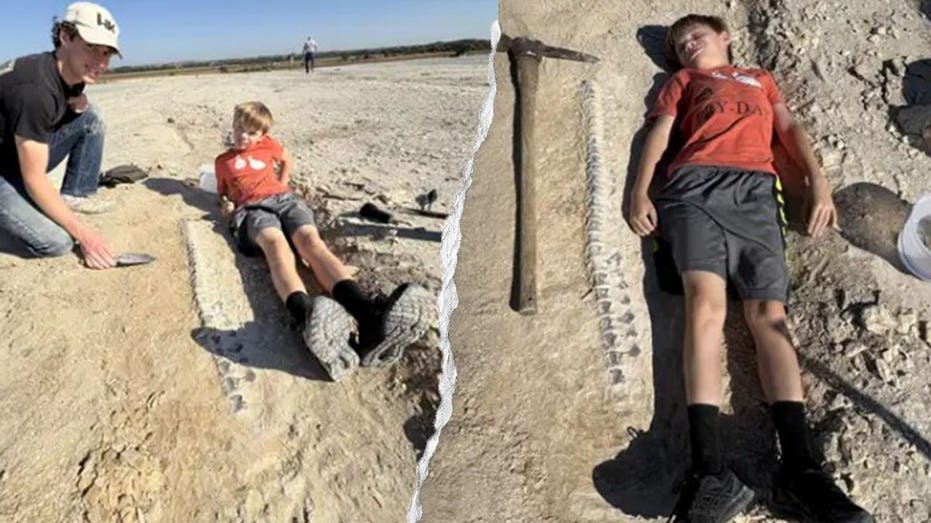
Kansas Boy, 12, Unearths 15-Foot Marine Reptile Fossil
A 12-year-old Kansas boy discovered a 15-foot tylosaurus fossil from 85 million years ago during a geology club field trip.
A 12-year-old boy on a geology club field trip in Kansas has unearthed a significant fossil discovery: a nearly complete 15-foot marine reptile skeleton estimated to be 85 million years old.
The fossil belongs to a tylosaurus, a large predatory marine reptile that lived during the Late Cretaceous period. The discovery was made during a trip organized by the boy's geology club, which was exploring an area known for its rich paleontological history.
The fossilized remains include a substantial portion of the creature's skull and rib cage. Paleontologists are particularly excited by the specimen's preservation, which offers a valuable glimpse into prehistoric marine ecosystems. The tylosaurus was a formidable predator, reaching lengths of up to 50 feet.
This find is expected to provide valuable data for scientific research and may eventually be displayed for the public. The discovery highlights the potential for significant paleontological finds even in well-explored regions and underscores the importance of educational field trips in fostering scientific interest and discovery.
The Kansas region has a long history of yielding important fossil discoveries, particularly from the Western Interior Seaway, which covered much of the state millions of years ago. This ancient seaway was home to a diverse array of marine life, including mosasaurs like the tylosaurus, plesiosaurs, and giant sea turtles.
Geology clubs and amateur paleontologists often play a crucial role in identifying and reporting significant fossil finds. Their explorations can sometimes lead to discoveries that professional paleontologists might overlook, contributing valuable specimens to museums and research institutions.
Experts have noted that fossils of this size and completeness are relatively rare, making this discovery particularly noteworthy. The educational aspect of the find is also significant, inspiring young minds to engage with science and history through hands-on exploration.
Further excavation and analysis will be required to fully assess the fossil's condition and its scientific importance. The exact location of the find has not been disclosed to protect the site pending further investigation and potential future excavation efforts.
This article was written by AI based on publicly available news reporting. Original reporting by the linked source.