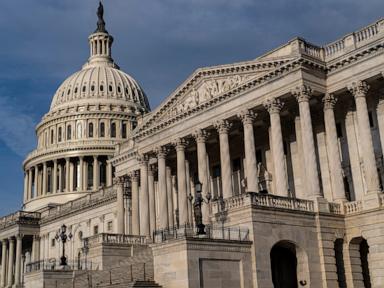
Key Senate Races Will Decide Party Control in Crucial November Election
Thirty-five Senate seats are up for grabs, with a handful of close races determining whether Democrats or Republicans control the chamber.
Thirty-five Senate seats are up for grabs when Americans head to the polls on November 3, with a crucial handful of these races poised to determine which party controls the chamber next year. Republicans currently hold a majority with 53 seats, while Democrats and two independents comprise the minority with 47 seats. For Democrats to regain control, they must win a net of four seats. Republicans can afford to lose up to three seats and still maintain a majority, bolstered by the tie-breaking vote of Vice President JD Vance.
Several races that garnered significant attention earlier in the year have receded from the spotlight as Election Day approaches. Republicans appear to have scaled back efforts to unseat incumbent Senator Jon Ossoff in Georgia. Similarly, their spending has ceased in North Carolina, where former Democratic Governor Roy Cooper is now favored to win the seat of retiring Republican Senator Thom Tillis, defeating former Republican National Committee Chair Michael Whatley.
As both parties gear up for the final stretch of their campaigns, several Senate contests are drawing intense scrutiny. In Michigan, a closely watched contest pits Republican nominee Mike Rogers against progressive newcomer Abdul El-Sayed. Rogers, a former congressman, narrowly lost his 2024 bid to current Senator Elissa Slotkin. El-Sayed, a former health executive, secured the Democratic nomination over a more moderate candidate. Republicans have focused on portraying El-Sayed as "radical" due to his support for Medicare for All and his stances on immigration, with some figures, including former President Donald Trump, making personal attacks.
El-Sayed, whose parents are Egyptian immigrants, has refuted these characterizations, calling them Islamophobic and suggesting they distract from economic issues. He stated that opponents "think they can point to my name and my faith and distract us from the fact that we can't afford our gas and we can't afford our groceries." Rogers, in a separate interview, expressed confidence in appealing to traditionally Democratic Jewish and Black voters who he believes are hesitant about El-Sayed. Despite Michigan voting for Trump in two of the last three presidential elections, Democrats have consistently won Senate races in the state since 1994.
Another pivotal race is in Texas, where Democrats aim to break a 33-year streak of Republican Senate representation. While traditionally a Republican stronghold, Democrats believe this could be the year they challenge that dominance. The race features Texas Attorney General Ken Paxton, who defeated incumbent Senator John Cornyn in a hard-fought GOP primary runoff with support from former President Trump.
Paxton faces State Representative James Talarico in the general election. The outcome in Texas, rated as a "Tossup" by ABC News, could significantly impact the overall balance of power in the Senate. The race has been marked by high spending and intense political maneuvering.
Beyond Michigan and Texas, other races remain competitive and could tip the balance. The shifting dynamics in these key battleground states underscore the high stakes of the upcoming elections, with control of the Senate hanging in the balance. Analysts are closely monitoring voter turnout and engagement in these areas.
The final weeks before Election Day will likely see intensified campaigning and spending in these critical Senate races, as both parties fight to secure the necessary seats to control the chamber and shape the legislative agenda for the next Congress.
This article was written by AI based on publicly available news reporting. Original reporting by the linked source.