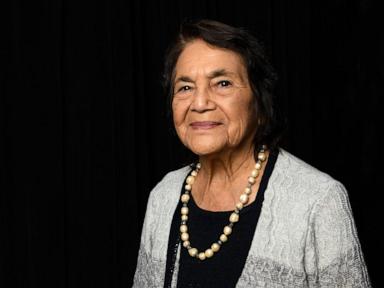
Labor Icon Dolores Huerta, United Farm Workers Co-Founder, Dies at 96
Dolores Huerta, a pivotal labor rights leader and co-founder of the United Farm Workers, has died at the age of 96.
Labor icon Dolores Huerta, a driving force behind the United Farm Workers and a lifelong advocate for workers' rights, has died at the age of 96, her family announced. The announcement was made via a statement on social media, expressing deep sadness at the loss of their "beloved mother."
Huerta was a central figure in the American labor movement, co-founding the United Farm Workers (UFW) in 1962 alongside Cesar Chavez. Her work with the UFW was instrumental in organizing farmworkers and fighting for better wages, working conditions, and civil rights.
The family's statement acknowledged the global mourning expected for the influential leader. "We know that many of you around the world share in our mourning, and we will be following up on plans to recognize and celebrate her incredible life and legacy," the statement read, while also requesting privacy during their time of grief.
Throughout her extensive career, Huerta was a tireless organizer and negotiator. She was particularly known for her role in the Delano grape strike and boycott, which brought national attention to the plight of agricultural laborers and led to significant improvements in their working conditions. Her activism extended beyond farmworkers to encompass broader civil rights issues.
Born in Dawson, New Mexico, in 1930, Huerta became a prominent activist early in her career. She was a key figure in the Chicano Movement and a vocal proponent of women's rights. Her advocacy earned her numerous accolades and awards over the decades, recognizing her profound impact on social justice in the United States.
Huerta's legacy is cemented in the ongoing struggle for labor rights and social equality. She inspired generations of activists with her unwavering commitment to nonviolent protest and her powerful oratory skills. Her co-founding of the UFW laid the groundwork for future labor organizing efforts across various industries.
The family has indicated that details regarding memorial services and celebrations of Huerta's life will be shared at a later date. Her passing marks the end of an era for labor activism, but her influence is expected to continue to resonate within social justice movements.
Questions remain about the specific plans for honoring her legacy and how her extensive work will be further documented and celebrated by the organizations and communities she served throughout her life.
This article was written by AI based on publicly available news reporting. Original reporting by the linked source.