Laos Cave Rescue: Knocking Sound Heard in Search for 2 Missing Villagers
Rescuers in Laos report hearing a knocking sound from a cave system where two villagers remain missing after flash flooding.
Rescue workers inside a flooded cave system in Laos have reported hearing a distinct knocking sound, potentially indicating the location of two remaining missing villagers. The two men are part of a group of seven who entered the caves in Xaisomboun province on May 19, seeking gold, but became trapped by flash floods.
This development marks a critical phase in a nearly two-week-long rescue operation. Five of the original seven villagers were successfully extricated last week. One was taught scuba diving techniques to navigate out of the flooded passages, while four others managed to crawl out on their own after rescuers pumped out a significant amount of water.
Kengkaj Bongkawong, the head of the Thai rescue team Metta Tham Rescue Kalasin, shared on Facebook that their team heard a responsive knocking sound when they knocked on cave walls. He stated that based on their initial assessment, the sound was not an echo, suggesting it was a deliberate signal. This finding is prompting a shift in strategy, moving beyond simply waiting for water levels to recede.
The implications of this reported sound are significant, offering a potential breakthrough in locating the two men. Rescuers are now focusing their efforts on exploring a sixth chamber within the cave system, where the men are believed to be trapped. Advanced technology, including LiDAR data and satellite imagery, is being employed to analyze the mountain's structure and identify potential passages like cave chimneys or air holes that could lead to the chamber.
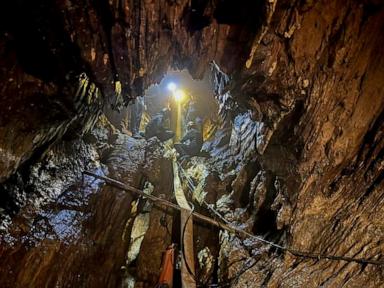
The challenging nature of the cave, described as a highly restrictive, fractured network of tunnels, has complicated rescue efforts. The trapped villagers were located more than 800 feet from the entrance, down a steep subterranean slope. The narrow passages necessitated the involvement of thin divers to navigate the space effectively.
Divers from various international locations converged at the site to assist. The successful rescue of the initial five villagers was met with relief. One Australian cave diver recounted the moment of their emergence, describing the sudden cheers and the sight of the muddy villagers appearing on their own.
Those rescued were provided immediate medical attention at the cave entrance, with one individual requiring hospitalization. The ongoing operation highlights the perilous conditions and the intricate geological formations rescuers must contend with in their efforts to bring the remaining two individuals to safety.
Questions remain about the exact condition of the two missing men and the feasibility of reaching them through the newly explored areas of the cave. The use of advanced mapping technology underscores the commitment to a data-driven approach in overcoming the complex environmental challenges.
This article was written by AI based on publicly available news reporting. Original reporting by the linked source.