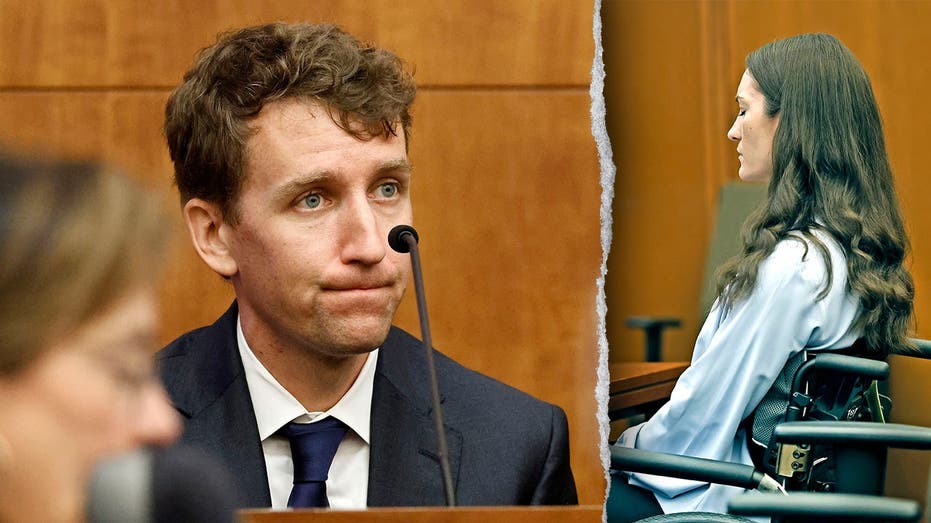
Lindsay Clancy's ex-husband details 'big spiral' in murder trial
Lindsay Clancy's ex-husband described her mental health decline, while an expert noted concerning medication use during her murder trial.
The ex-husband of Lindsay Clancy, accused of murdering her three young children, testified Wednesday about her alleged mental health struggles, describing a "big spiral" in the months leading up to the tragic events.
During the ongoing trial, he detailed how Clancy's mental state appeared to deteriorate, marked by increased anxiety and a perceived "spiral" that concerned him. His testimony provided a personal account of the period preceding the February 2023 incident in Duxbury, Massachusetts, where authorities allege Clancy strangled her 5-year-old son, 3-year-old daughter, and 7-month-old son.
He specifically recalled Clancy's prescription for Seroquel, an antipsychotic medication, and her subsequent use of it. According to his testimony, Clancy began taking Seroquel, and he observed a significant change in her behavior and mental state after she started the medication. He expressed that her condition seemed to worsen considerably during this period.
A mental health expert called to testify in the case highlighted specific aspects of Clancy's treatment that raised alarms. The expert stated that one particular element of Clancy's medication regimen "scared me," indicating a professional concern about the prescribed drugs and their potential impact.
Prosecutors have argued that Clancy was experiencing a severe mental health crisis, exacerbated by postpartum depression and psychosis, when she committed the alleged killings. Her defense team has focused on her mental state at the time, suggesting she was not criminally responsible due to profound mental illness. The ex-husband's testimony is crucial for both sides, offering insight into the alleged progression of her condition.
Dr. Richard Frame, a psychiatrist, previously testified for the defense, stating that Clancy suffered from postpartum depression and psychosis. He noted that she had been prescribed Seroquel, along with other medications, and had reportedly been experiencing suicidal thoughts. The expert's testimony on Wednesday further elaborated on the potential dangers associated with certain psychiatric medications when used in specific contexts.
The trial is expected to delve deeper into Clancy's medical history, her interactions with healthcare providers, and the timeline of her mental health decline. The prosecution aims to establish that Clancy was aware of her actions, while the defense seeks to prove her lack of criminal responsibility due to her mental state.
As the proceedings continue, the court will weigh the testimony of family members, medical professionals, and law enforcement to determine the circumstances surrounding the deaths of the three children and Lindsay Clancy's culpability.
This article was written by AI based on publicly available news reporting. Original reporting by the linked source.