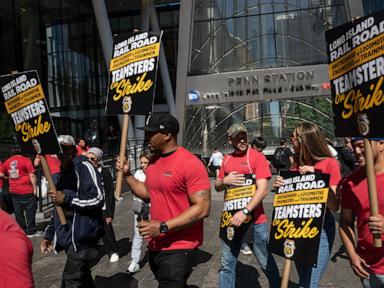
Long Island Rail Road Strike Ends; Limited Service Resumes Tuesday
New York Gov. Kathy Hochul announced the end of the Long Island Rail Road strike, with limited service resuming Tuesday at noon.
The Long Island Rail Road (LIRR) strike has concluded, New York Governor Kathy Hochul announced Monday night, following a tentative agreement reached between the Metropolitan Transportation Authority (MTA) and five LIRR unions. Limited service is set to resume on Tuesday at noon, with full service expected by the afternoon commute.
The resolution comes after a multi-day work stoppage that began Saturday at midnight, disrupting the daily commutes of over 300,000 riders. The strike marked the first for the LIRR in 32 years, highlighting the significant impact of labor disputes on public transportation infrastructure.
Governor Hochul stated that the agreement includes raises for LIRR workers and protects riders and taxpayers, emphasizing that commuters will not face a fare increase to fund the new contract. Details of the deal remain undisclosed pending ratification by the unions.
MTA CEO Janno Lieber, who joined Hochul at a press conference, confirmed the strike's end at midnight Monday. LIRR President Rob Free advised commuters to consult the LIRR app and website for updated schedules as service gradually returns, noting that bus and shuttle services would continue to support the morning commute on Tuesday.
New York City Mayor Zohran Mamdani expressed gratitude for the agreement, acknowledging the importance of the LIRR and its workforce. City Hall pledged to continue monitoring traffic conditions and ensuring commuter safety.
The dispute arose from a failure to reach a new contract agreement before the deadline. Unions, including the Brotherhood of Locomotive Engineers and Trainmen (BLET), sought wage increases of 14.5% over four years, alongside concerns about healthcare costs. MTA officials had proposed slightly lower increases with a lump-sum payment in the contract's final year.
Negotiations were reignited Sunday afternoon when the National Mediation Board, a federal agency overseeing railroad labor relations, intervened and convened a meeting with both parties. Discussions continued through Monday morning as commuters scrambled for alternative transportation methods.
While the immediate crisis appears averted, the resolution awaits formal union ratification. The focus now shifts to the operational ramp-up of LIRR services and ensuring a smooth transition back to regular commuting for hundreds of thousands of New Yorkers.
This article was written by AI based on publicly available news reporting. Original reporting by the linked source.