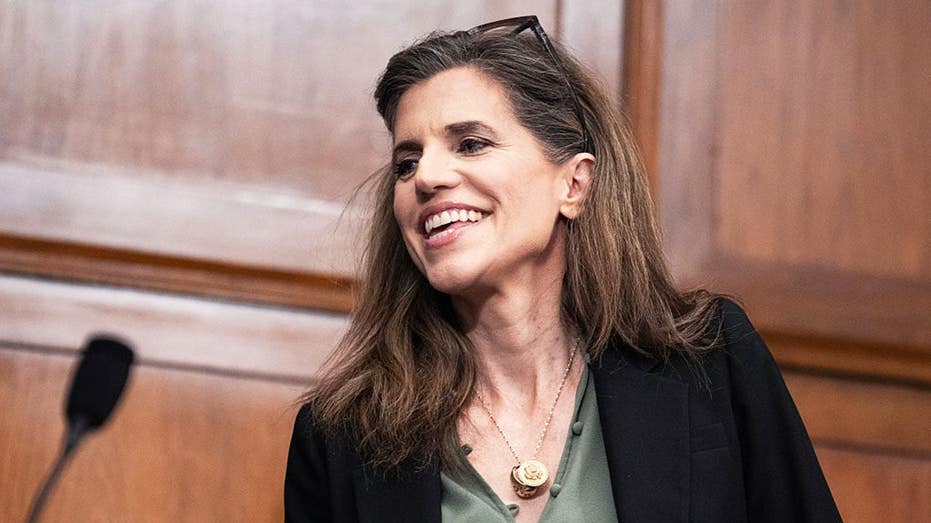
Mace Responds to Critics Over SEC Saturday, Caleb Williams Memes
Congresswoman Nancy Mace directly addressed online criticism regarding her social media posts, particularly those involving SEC Saturday and Caleb Williams.
U.S. Congresswoman Nancy Mace has issued a direct response to what she terms as "liberal" critics who were "triggered" by her social media activity, specifically her posts related to "SEC Saturday" and memes involving NFL quarterback Caleb Williams. Mace, representing South Carolina's 1st congressional district, made her remarks following a period of online backlash.
The controversy appears to stem from Mace's engagement with college football culture and her commentary on public figures, which some perceived as inappropriate or politically charged. The mention of "SEC Saturday" points to her participation in or commentary on the popular Southeastern Conference college football events, a common cultural touchstone in the Southern United States.
The inclusion of Caleb Williams, a prominent college football quarterback, in her social media posts, particularly in meme formats, seems to have been a focal point for criticism. Williams recently experienced a scare with a hamstring injury during a game, though subsequent medical evaluations indicated a strain without a tear, allowing him to potentially avoid significant time off.
Mace's statement suggests a deliberate deflection of criticism, framing the backlash as politically motivated. Her message indicates a stance of defiance against those she identifies as "libs," implying a belief that their reactions are driven by partisan opposition rather than substantive concerns about her actions or commentary.
The source material does not provide specific details about the content of the memes or the exact nature of the criticism leveled against Mace. However, it positions her response as a defense of her engagement with popular culture and a dismissal of what she views as an overreaction from a particular political segment.
This incident highlights the intersection of politics, social media, and popular culture, where public figures often navigate a complex landscape of online discourse. The reactions to Mace's posts underscore the heightened scrutiny and polarized environment in which political figures operate today.
Further context on the specific nature of the memes or the criticisms could provide a clearer understanding of the events that prompted Mace's direct response. The situation suggests a broader trend of political figures using or commenting on cultural phenomena, which can sometimes lead to unintended or amplified online reactions.
As of the report's publication, the exact details of the online interactions that triggered Mace's statement remain somewhat opaque, but her clear message indicates a deliberate choice to confront her critics publicly.
This article was written by AI based on publicly available news reporting. Original reporting by the linked source.