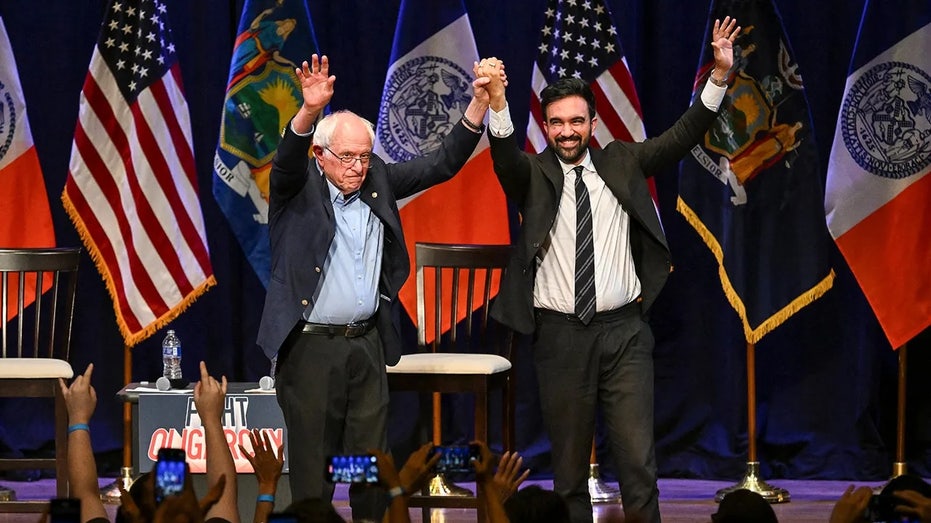
Mamdani Accuses Democratic Party of Being Controlled by Big Money
Academics scholar Mamdani claims the Democratic Party is influenced by wealthy donors and paid consultants, not the will of the people.
Acclaimed academic and author Mahmood Mamdani has leveled a sharp critique against the Democratic Party, asserting that its leadership and decision-making processes are heavily influenced by "well-paid consultants and big money interests." Mamdani, known for his extensive work on colonialism, nationalism, and political conflict, voiced these concerns in a recent statement, suggesting that the party's direction is not solely dictated by its constituents or core principles.
Mamdani's remarks highlight a recurring debate within American politics regarding the role of money and corporate influence in shaping party platforms and legislative agendas. Critics often point to campaign finance laws and lobbying efforts as mechanisms through which wealthy individuals and corporations can exert undue influence over elected officials and party structures.
According to Mamdani's assessment, the Democratic Party, despite its stated aims to represent working-class and middle-class Americans, appears to be more responsive to the financial backing and strategic advice provided by powerful external entities. This dynamic, he suggests, can lead to policies that do not fully align with the needs or desires of the average voter.
The implications of Mamdani's critique extend to questions of political representation and accountability. If parties are perceived as being beholden to financial backers rather than their electorate, it can foster disillusionment and erode public trust in the democratic process. This can also impact the types of candidates who are able to gain traction and funding within the party.
This perspective echoes sentiments voiced by various progressive and grassroots movements that have called for campaign finance reform and greater transparency in political funding. These groups often argue that the current system creates an uneven playing field, favoring established interests over emerging voices and public good initiatives.
Mamdani's commentary adds an academic's voice to the ongoing discussion about the health of American democracy and the factors that truly drive political power. His work has often focused on dissecting power structures and their impact on governance and society.
While Mamdani did not specify particular instances or policies, his broad accusation points to a systemic issue he believes is detrimental to the Democratic Party's stated mission and its connection with the electorate. The scholar's critique invites further examination of the financial underpinnings of political parties and their influence on policy outcomes.
The scholar's perspective suggests a need for greater scrutiny of the financial relationships that underpin political parties and their operations. The debate over money in politics remains a central challenge for democratic systems worldwide, with ongoing efforts to balance free speech and association with the need to prevent corruption and ensure equitable representation.
This article was written by AI based on publicly available news reporting. Original reporting by the linked source.