Man Shot Dead as Kenyans Protest US Ebola Quarantine Facility
Kenyan police fatally shot one man and arrested 19 during protests against a proposed US Ebola quarantine facility near Laikipia airbase.
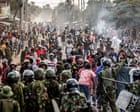
A man was shot dead by Kenyan police on Tuesday during a protest against a proposed U.S. Ebola quarantine facility in Nanyuki, located 120 miles from the capital, Nairobi. The incident occurred as demonstrators gathered near Laikipia airbase, the planned site for the center.
The protest reflects growing anger and opposition within Kenya to the U.S. government's plan to establish a quarantine facility for individuals exposed to the Ebola virus. Concerns have been raised about the potential risk of the highly contagious disease being present on Kenyan soil.
Patrick Wahome, an organizer of previous protests against the facility, told Reuters that the deceased sustained a fatal gunshot wound to the head. Reporters on the scene witnessed the man's body in a police van. Police have stated they lack immediate information regarding the shooting. The Kenya Human Rights Commission reported that "hooded police officers... fired live bullets and arbitrarily arrested 19 protesters," as demonstrators clashed with law enforcement.
The proposed facility is intended to house 50 beds and would be staffed by 30 U.S. medical personnel. While protests have escalated, with two other individuals killed in a similar demonstration last week, the Kenyan government, led by President William Ruto, has indicated an intention to proceed, citing past aid from Washington.
Legal challenges have emerged as well. The non-profit Katiba Institute filed a petition that led a Nairobi court to temporarily halt the facility's establishment and the admission of individuals exposed to Ebola into the country. The court issued an order last month preventing the Kenyan government from moving forward until the case is resolved. The next court hearing is scheduled for June 23.
Protesters have voiced fears that the facility could become a vector for the deadly virus, despite assurances that stringent safety protocols would be in place. The demonstrations have seen participants wear protective gear and carry symbolic coffins labeled "Ebola."
This opposition highlights a growing tension between national safety concerns and international health cooperation, particularly in the context of managing global health crises. The incident underscores the volatile atmosphere surrounding the U.S. proposal and the deep-seated anxieties it has ignited among some segments of the Kenyan population.
Questions remain about the future of the proposed facility, the ongoing legal battle, and the potential for further unrest as the debate over the quarantine center continues. The Kenyan government's stance, coupled with public apprehension, sets the stage for a complex and potentially contentious resolution.
This article was written by AI based on publicly available news reporting. Original reporting by the linked source.