Maryland Governor Moore Fears Trump Interference in Midterm Elections
Maryland Governor Wes Moore expressed deep concern that President Trump may use federal power to disrupt upcoming midterm elections.
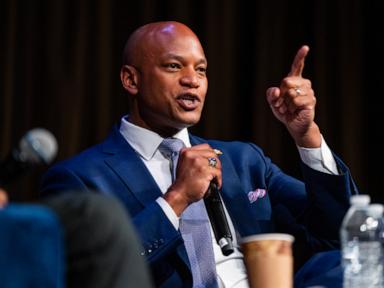
Maryland Governor Wes Moore stated he is "very concerned" that President Donald Trump will use the power of the federal government to interfere with the upcoming midterm elections this fall. Moore, who is set to become the chair of the National Governors Association, voiced these concerns in a recent interview, suggesting Trump's actions could aim to maintain his party's grip on power.
The governor pointed to several actions by the Trump administration that he believes indicate a potential for election interference. These include efforts to restrict mail-in voting, attempts to acquire voter information from states, and the possibility of deploying federal troops or agents to polling places. Moore emphasized that the National Governors Association, a bipartisan organization, has a role in ensuring states can independently manage their elections as outlined by the U.S. Constitution.
"I don't think that the president is trying to hide the ball on this," Moore stated, adding, "It's not even am I concerned about what the president could do? I'm concerned about what he's already doing in broad daylight." The governor's remarks come as his national profile grows, fueled by speculation about a potential 2028 presidential run, a prospect he has publicly dismissed while focusing on the upcoming elections.
Moore is scheduled to officially assume the leadership of the National Governors Association on Saturday. This role places him at the head of a significant bipartisan forum for state leaders. His agenda for the NGA includes a national program aimed at community building and engaging young people in the workforce through service. This initiative, called "Service United," has already secured $10 million in philanthropic funding and builds upon similar programs implemented in Maryland.
"Service will save us as a society because I know service saved me," Moore said, drawing a parallel to his own experiences in the Army. The "Service United" campaign seeks to provide career pathways for young people, with partners like Kaiser Permanente establishing a youth mental health corps. The Andrew Carnegie Foundation is also supporting the program, with its president, Dame Louise Richardson, expressing hope for a future where service experience is valued as highly as college education.
Some Republicans have shown support for Moore's program, including Oklahoma Governor Kevin Stitt, the outgoing NGA chair. Stitt specifically praised the apprenticeship model within the initiative, noting its potential to connect students with workforce learning opportunities. This bipartisan reception for his service initiative highlights Moore's efforts to foster cooperation among governors.
However, Moore's leadership comes at a time of deep political divisions. While he champions bipartisanship through initiatives like "Service United," the broader political landscape presents significant challenges. The ability of the NGA to navigate these divides, particularly concerning election integrity and federal-state relations, remains a key question as Moore steps into his new role.
As the midterms approach, the focus will be on how states manage their election processes and the extent to which federal actions, or perceived threats thereof, impact voter confidence and participation. Governor Moore's concerns underscore the ongoing tension between state autonomy in elections and potential federal involvement.
This article was written by AI based on publicly available news reporting. Original reporting by the linked source.