Mining Threatens Deep-Sea Molluscs and Desert Frogs, Red List Reveals
Human mining activities are pushing deep-sea molluscs and desert rain frogs towards extinction, despite their remarkable survival strategies, according to a new Red List.
The planet's most ingenious species are succumbing to human destruction, with newly released data from the International Union for Conservation of Nature (IUCN) Red List highlighting threats to creatures adapted to extreme environments. Molluscs living near deep-sea hydrothermal vents and the desert rain frog, which thrives in arid conditions, are now at significant risk due to mining operations.
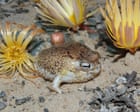
These species have evolved extraordinary adaptations to survive in some of the Earth's harshest habitats. Hundreds of mollusc species have colonized the crushing depths of the ocean floor around hydrothermal vents, enduring extreme temperatures and pressures. The desert rain frog, found in southern Africa, has adapted to survive with minimal water, burrowing deep into the sand to escape the sun and emerging only at night.
However, these remarkable survival strategies are proving insufficient against the escalating pressures of human industrial activities. An assessment for the Red List found that two-thirds of mollusc species unique to deep-sea vents face extinction, primarily because of the growing threat of deep-sea mining. Similarly, diamond mining operations are endangering the desert rain frog, a creature that has evolved to require very little water.
The IUCN emphasized that while the situation is dire for many species, conservation efforts can still make a difference. The latest Red List update includes positive news for the numbat, an Australian marsupial, which has shown signs of recovery thanks to dedicated protection measures against introduced predators like feral cats and foxes.
"Life on Earth has adapted to survive in the most hostile and unusual habitats, but as pressures on biodiversity mount across the planet, even the creatures with the most ingenious survival strategies are under threat," stated Dr. Grethel Aguilar, IUCN director general. She added that there is a clear path out of the biodiversity crisis through nature conservation.
Conservation work has led to the establishment of at least five more self-sustaining numbat populations, demonstrating the effectiveness of targeted protection programs. This success offers a glimmer of hope amidst the broader concerns raised by the Red List.
Experts point to deep-sea mining as a significant emerging threat, with potential irreversible damage to unique and fragile ecosystems that have taken millennia to develop. The impacts of disturbing these remote environments are not yet fully understood but are feared to be substantial.
While the Red List often highlights alarming declines, it also serves as a crucial tool for prioritizing conservation actions. The ongoing challenge lies in balancing human development needs with the imperative to protect biodiversity, especially in environments that are difficult to monitor and regulate.
This article was written by AI based on publicly available news reporting. Original reporting by the linked source.