More Than Half of England Declared in Drought as Heatwave Continues
Over half of England is now officially in drought, with seven regions impacted by hot, dry weather and low water supplies.
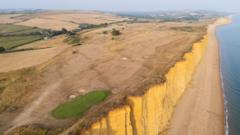
More than half of England has officially been declared to be in drought as the country grapples with a prolonged period of hot and dry weather that has significantly depleted water supplies. The Environment Agency (EA) announced on Wednesday that seven regions, encompassing large swathes of central, eastern, and southern England, are now experiencing official drought conditions.
This declaration comes as July recorded only 7% of its expected rainfall across England, with southern regions receiving just 1% of average precipitation. The ongoing dry spell has led to a range of environmental impacts, including critically low river flows, the premature harvesting of crops, and a heightened risk of wildfires.
Helen Wakeham, director of water at the Environment Agency and chair of the National Drought Group, stated that the current weather patterns are causing water to be used at a rate faster than it can be naturally replenished. Millions of residents are already subject to hosepipe bans as water companies implement restrictions to conserve supplies.
While England has declared drought conditions, Scotland monitors water scarcity. Some areas in eastern Scotland are experiencing "significant scarcity," according to the Scottish Environment Protection Agency. North Wales and the Upper Severn river basin also entered drought conditions last week.
The seven English regions now officially in drought are: East Anglia, Hertfordshire and London, Thames Valley, Hampshire and the Isle of Wight, Devon and Cornwall, the West Midlands, and Wessex (covering Dorset, Somerset, Wiltshire, and South Gloucestershire).
While there is no single definition for drought, it typically signifies an extended period of unusually dry weather that adversely affects people, wildlife, and the environment. The current situation marks the third drought in England within the past five years, following occurrences in 2022 and 2025.
This summer has been characterized by repeated and record-breaking heatwaves. The Met Office confirmed that the June temperature record was broken, with the previously reported figure of 37.7C in Norfolk updated to 38.0C, surpassing the prior June high of 35.6C.
The prolonged dry spell and high temperatures raise concerns about the long-term sustainability of water resources and the resilience of ecosystems and agriculture to such extreme weather events.
This article was written by AI based on publicly available news reporting. Original reporting by the linked source.