Nepal-Tibet Flood Death Toll Exceeds 900, Over 4,700 Missing
Flash floods in Nepal and Tibet have claimed over 900 lives, with more than 4,700 people missing, including dozens of Americans.
The death toll from last week's devastating flash floods in the Nepal-Tibet border region has climbed to at least 919 people, officials from both Nepal and China reported Monday. The disaster has also left more than 4,700 individuals missing, underscoring the scale of the catastrophe.
Nepal's National Disaster Management Authority confirmed on Monday that at least 903 bodies had been recovered within its territory. The number of missing in Nepal surged significantly, with authorities listing 4,247 people unaccounted for. On the Tibetan side of the border, China's state-run Xinhua News Agency reported that at least 16 people have been confirmed dead and another 546 are still missing.
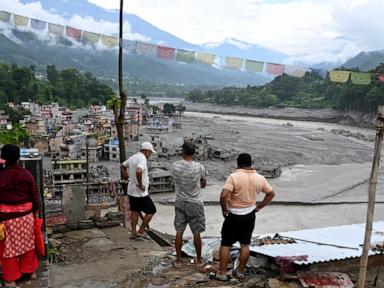
The flooding, which occurred early Wednesday morning in Nepal's northern Rasuwa district, inundated areas along the Trishuli River. The torrent of ice, water, and debris caused widespread destruction, burying buildings and damaging critical infrastructure like bridges and roadways. The impact was felt as far as 62 miles downstream into Nepal, according to an ABC News analysis of available video and satellite imagery.
Indications suggest the flood was triggered by a substantial landslide approximately 12 miles northeast of the Rasuwagadhi border post. The U.S. Geological Survey registered a 5.2-magnitude landslide in Nepal on Wednesday, originating from a cliff face at an altitude of about 16,000 feet. The debris avalanche descended approximately 6,000 feet down the mountainside.
Among the missing are at least 85 American citizens, U.S. State Department spokesperson Tommy Pigott confirmed Sunday. While nine Americans have been successfully evacuated, the remoteness of the affected region presents significant challenges for information gathering and rescue efforts. Pigott stated that the State Department has activated $3.6 million in emergency humanitarian assistance, intended to provide up to three months of food for up to 10,000 flood-affected households.
The U.S. Embassy in Kathmandu has issued a warning to American citizens, advising against any travel to the disaster zone. The advisory cites ongoing flood damage, disrupted transportation and communication networks, active search and recovery operations, and the persistent risk of further flooding and landslides.
Rescuers have been working tirelessly in challenging conditions to recover victims. Images from the ground show the grim reality of the disaster, with efforts underway for the mass burial of those who perished in the floods. The full extent of the human and material cost of this disaster continues to unfold as search operations persist.
Questions remain about the long-term impact on the region's infrastructure and environment, as well as the efficacy of future disaster preparedness measures in this geologically active and remote border area. The international community is closely monitoring the situation and the response from both Nepalese and Chinese authorities.
This article was written by AI based on publicly available news reporting. Original reporting by the linked source.