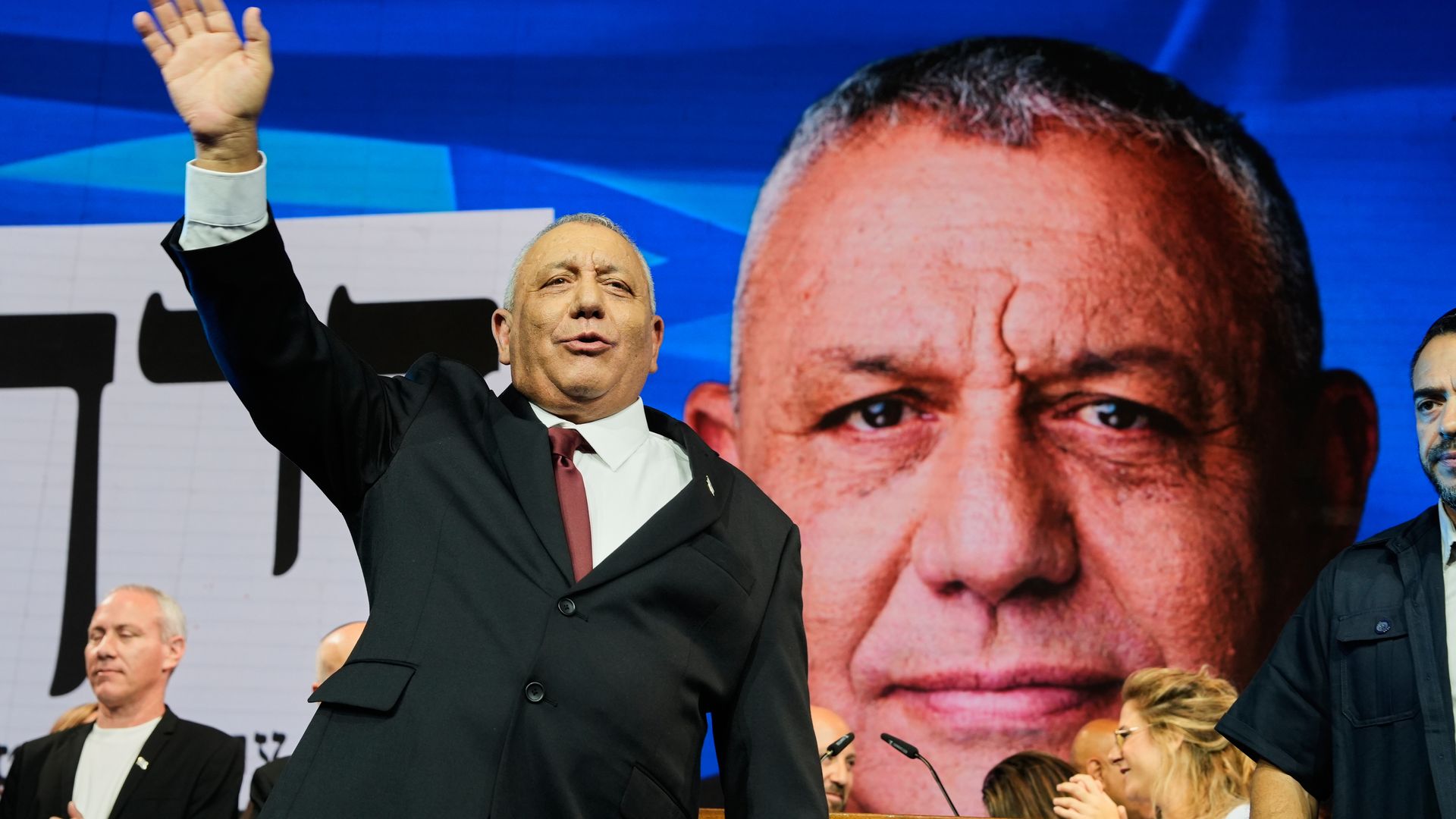
Israel President Taps Netanyahu Rival Eisenkot to Form Government
President Isaac Herzog tasked Gadi Eisenkot with forming a government after the latest Israeli election ended in a deadlock.
President Isaac Herzog has tasked Gadi Eisenkot, the strongest rival to incumbent Prime Minister Benjamin Netanyahu, with the responsibility of forming a new government in Israel. The move comes after the country's recent general election resulted in a political deadlock, leaving no clear majority for any single party or bloc.
This development marks a significant moment in Israeli politics, as it presents a potential shift away from Netanyahu's long-standing leadership. The election results have underscored a deeply divided electorate, making the formation of a stable governing coalition a complex challenge.
Eisenkot, a former chief of staff of the Israel Defense Forces (IDF) and a prominent figure in the National Unity party, now has a limited timeframe to assemble a coalition that can secure a majority in the Knesset, Israel's parliament. The president's decision reflects the intricate negotiations and the search for a political compromise in the wake of the inconclusive vote.
The implications of Eisenkot's mandate are far-reaching. His success could lead to a new governing configuration, potentially altering the political landscape and the direction of national policy. Conversely, his failure to form a government could trigger further political instability or even necessitate another election.
Benjamin Netanyahu's Likud party emerged as the largest single party, but not with enough seats to form a majority government on its own. The fragmented nature of the results meant that the traditional blocs supporting either Netanyahu or his opposition were short of the 61 seats required to govern.
Political analysts suggest that Eisenkot's chances depend on his ability to bridge deep ideological divides between parties on both the right and the left. His background as a military leader is seen by some as a potential asset in brokering deals, but the political challenges are immense.
Discussions are expected to intensify among party leaders in the coming days. The outcome of these negotiations will determine whether Israel moves towards a new government led by Eisenkot or faces continued political uncertainty. The president's office has emphasized the urgency of the situation.
Key questions remain about the potential composition of a coalition under Eisenkot. His ability to secure support from a diverse range of parties, each with its own demands and priorities, will be the ultimate test of his mandate.
This article was written by AI based on publicly available news reporting. Original reporting by the linked source.