Netanyahu: Trump Decides Iran Strategy, Skeptical of Diplomacy
Israeli Prime Minister Benjamin Netanyahu stated President Trump makes decisions on Iran, expressing skepticism about diplomatic solutions.
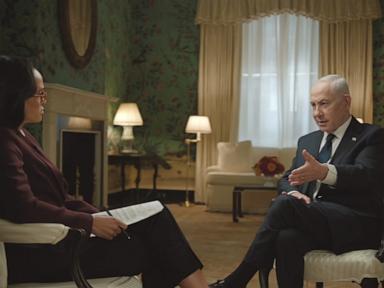
Israeli Prime Minister Benjamin Netanyahu asserted on Wednesday that President Donald Trump holds the ultimate authority regarding decisions on how to proceed with Iran, particularly amid ongoing U.S. negotiations. Netanyahu, speaking in a sit-down interview with ABC News' Linsey Davis, indicated that the choice on future actions rests with the U.S. president.
Netanyahu's remarks come as tensions between the U.S. and Iran have escalated, with the conflict entering its sixth month. The prime minister expressed his skepticism about the possibility of a diplomatic solution with the Iranian regime, citing a history of what he described as deception and delay tactics. He suggested that sustained diplomatic and economic pressure might be necessary, but indicated a willingness to "give it a try."
The Israeli leader affirmed his belief that Trump is in charge of the U.S.-Israeli partnership, particularly after their closed-door meeting at the White House earlier this week. Netanyahu characterized the relationship as one where the U.S. is the "senior partner" and Israel is a "junior partner," but emphasized his commitment to advocating for Israel's national interests and security.
He also addressed recent tensions between himself and President Trump, as well as Vice President J.D. Vance. Netanyahu stated that he had a "very good conversation" with Vice President Vance that morning, suggesting that any misunderstandings regarding Israeli government policy and its alleged attempts to influence U.S. public opinion or derail peace negotiations had been resolved.
Earlier in the month, Vice President Vance had claimed on a podcast that elements within Netanyahu's government were engaged in manipulating U.S. public opinion through paid campaigns to obstruct U.S.-Iran peace talks, suggesting some Israeli figures desired a prolonged conflict. Netanyahu refuted these claims, stating that such actions were not Israel's policy.
While historically describing the U.S.-Israel relationship as a "wall of granite," Netanyahu acknowledged recent shifts in American public support for Israel, which polls suggest have shown "cracks." He attributed this change partly to the proliferation of social media and the alleged manipulation of public discourse by foreign entities using bot farms.
Netanyahu reiterated his appreciation for the United States' role under President Trump in joining forces against a "common enemy that wants to destroy us both." However, he maintained his cautious stance on the efficacy of diplomatic engagement with Iran, emphasizing the need for clear-eyed assessment of the regime's actions.
The ongoing situation highlights the complex dynamics between the two allies as they navigate regional security challenges, with the ultimate decision-making power on critical foreign policy issues appearing to rest with the U.S. administration.
This article was written by AI based on publicly available news reporting. Original reporting by the linked source.