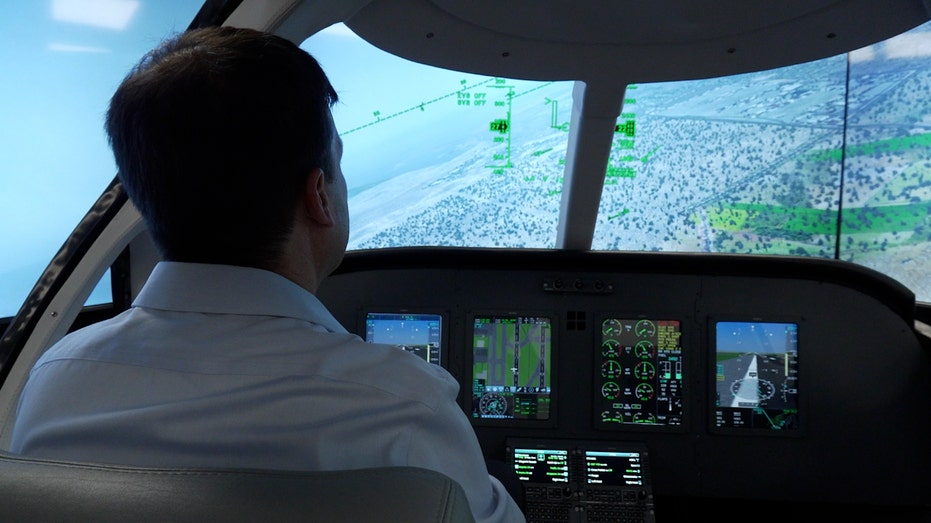
New Helmet System Promises to Revolutionize Pilot Vision in Low Visibility
A helmet-mounted vision system is set to transform pilot sight in fog and darkness, offering enhanced situational awareness.
A groundbreaking helmet-style cockpit vision system is poised to significantly alter how pilots perceive their surroundings, particularly in conditions of limited visibility such as fog, clouds, or darkness. This innovative technology aims to provide pilots with a clearer, more comprehensive view of the external environment directly within their line of sight.
The development addresses a long-standing challenge in aviation: maintaining optimal situational awareness when natural visual cues are obscured. Traditional methods rely heavily on instrument readings, which can be less intuitive and more prone to misinterpretation than direct visual input. This new system seeks to bridge that gap by augmenting or even replacing the need for conventional visual references.
The system projects critical flight information and enhanced external imagery onto the pilot's visor. This integrated display allows pilots to 'see through' adverse weather by rendering a clear picture of the runway, surrounding terrain, and other aircraft. Early reports suggest the technology significantly boosts a pilot's ability to make timely and accurate decisions, a crucial factor in flight safety.
Experts believe this advancement could have far-reaching implications for aviation safety and efficiency. By reducing reliance on visual ground aids, which are not always available, and by providing a more robust perception of the environment, the system could enable safer landings and takeoffs in previously challenging conditions. This might lead to fewer flight delays and diversions due to poor weather.
The technology draws upon advancements in sensor technology, high-resolution displays, and sophisticated image processing. Similar systems have been explored and implemented in military aviation for years, where operating in degraded visual environments is common. Adapting and refining this technology for commercial and general aviation presents a new frontier.
While specific manufacturers and timelines for widespread adoption were not detailed, the concept signifies a major leap forward from current cockpit technology. The goal is to create a seamless integration of digital and real-world views, minimizing pilot workload and maximizing safety.
Further development will likely focus on refining the system's ability to handle complex scenarios, such as identifying obstacles on the runway or navigating in congested airspace during low visibility. Ensuring the reliability and certification of such a transformative technology will be paramount for its successful integration into aviation fleets.
This innovation represents a significant step towards an all-weather capability for aircraft, potentially making flight operations more dependable and secure across a wider range of atmospheric conditions. The ultimate impact will depend on regulatory approval, cost-effectiveness, and pilot training.
This article was written by AI based on publicly available news reporting. Original reporting by the linked source.