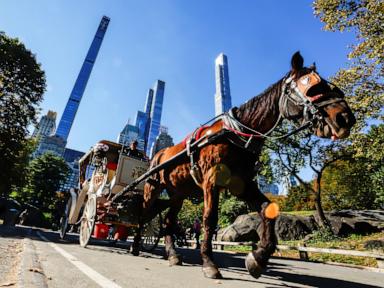
New York City Bans Horse-Drawn Carriages, Effective 2028
New York City Council voted to ban horse-drawn carriages by June 2028, following a fatal tourist incident and years of advocacy.
New York City leaders have voted to ban horse-drawn carriages, with the practice set to end by June 1, 2028. The City Council approved Romanch's Law with a 40-to-7 vote, prohibiting new licenses and phasing out existing operations. The legislation also stipulates that horses involved in the trade cannot be sold to slaughterhouses.
The decision follows a summer incident where an 18-year-old tourist, Romanch Mahajan, died after a horse pulling a carriage lost control in Central Park, causing the carriage to topple with his family inside. This event amplified long-standing concerns about animal welfare and public safety associated with the carriage industry.
Animal rights groups and park advocates, who have long campaigned for a ban, lauded the vote. They cited multiple past incidents where horses have bolted or caused disruptions, leading to injuries among tourists and parkgoers. The Central Park Conservancy, which manages the park, stated that the nearly dozen carriage-related incidents in just over a year were a critical factor in their support for the ban.
However, the union representing approximately 150 horse-drawn carriage drivers has signaled its intent to pursue legal action against the city. Drivers protested outside City Hall on Thursday, and the union informed the city's law department of their plans to seek a temporary restraining order.
Previous mayoral administrations, including those of Bill de Blasio and Eric Adams, had attempted to ban horse-drawn carriages, but lacked sufficient support within the City Council. The recent fatality provided the necessary impetus for the current council to pass the veto-proof legislation.
City Council Speaker Julie Menin emphasized the safety concerns, stating that the carriages pose a risk in an area that attracts millions of visitors annually. She highlighted the challenges of operating such a business, particularly in extreme weather conditions, with horses pulling heavy loads.
To address the impact on drivers, the bill includes provisions for a workforce transition program. This program is designed to offer unionized drivers job placement assistance, training opportunities, career counseling, and financial compensation. The specifics of this program are expected to be developed as the 2028 deadline approaches.
The ban represents a significant shift for a practice that has been a fixture in New York City for decades, particularly within Central Park. The outcome of the union's threatened legal challenge and the implementation of the transition program for drivers are key areas to watch as the city moves towards phasing out horse-drawn carriages.
This article was written by AI based on publicly available news reporting. Original reporting by the linked source.