Niger's military regime arrests dozens in LGBTQ+ 'witch-hunt'
Niger's military regime has arrested up to 40 people for homosexuality, criminalizing same-sex acts under a new penal code.
A "witch-hunt" targeting the LGBTQ+ population is underway in Niger, with the country's military regime arresting dozens of individuals since the introduction of a new penal code earlier this year. The arrests, which have led to the imprisonment of 16 men, including high-ranking military officials, signal a significant shift in the West African nation's legal landscape.
The new penal code, enacted in February, explicitly criminalizes "indecent or unnatural acts" and "sexual relations with a person of the same sex." This legislation carries penalties of up to 10 years imprisonment and a fine of up to 100 million West African CFA francs (approximately £130,000). It marks the first time in Niger's history that homosexuality has been formally outlawed.
Local media reports indicate that up to 40 people have been arrested in connection with the new law, with 16 men currently imprisoned. A source, who requested anonymity, described the current climate as "truly toxic" for LGBTQ+ individuals, forcing many to "keep a low profile and gone into hiding" due to the heightened risks. Organizations that provide essential HIV services to men who have sex with men have been compelled to cease their operations.
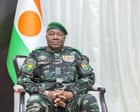
The crackdown follows similar legislative trends in neighboring Mali and Burkina Faso, which have also introduced laws criminalizing homosexuality within the past two years. These developments occur against a backdrop of political upheaval in Niger, where military leader Gen Abdourahamane Tiani seized power in a coup d’état in July 2023. Tiani, who was sworn in as president for a five-year term and dissolved all political parties, has adopted anti-imperialist rhetoric and formed the Alliance of Sahel States with Mali and Burkina Faso, distancing the nation from the Economic Community of West African States (Ecowas).
Political scientists and activists have criticized the move, suggesting that such legislation is being used by political leaders to advance their agendas. Larissa Kojoué, a political scientist and pan-African activist, dismissed the notion that homosexuality is inherently linked to Western culture, stating that political leaders are exploiting the issue for their own purposes. The criminalization of homosexuality raises serious concerns about the potential resurgence of HIV/Aids, particularly given the loss of access to vital PrEP drugs and the disruption of services for at-risk populations.
The arrests and the implementation of the new penal code have created an atmosphere of fear and uncertainty for LGBTQ+ individuals in Niger. The "witch-hunt" narrative, as described by local sources, suggests a broader campaign beyond mere legal enforcement, potentially involving increased social stigma and discrimination.
Experts and human rights organizations are closely monitoring the situation in Niger, expressing concern over the potential for further human rights violations. The long-term implications of these laws on public health, particularly concerning HIV prevention and treatment, are also a significant worry.
Questions remain about the full extent of the arrests and the specific criteria used for detentions. The disruption of vital health services also raises critical questions about the government's commitment to public health and the well-being of all its citizens.
This article was written by AI based on publicly available news reporting. Original reporting by the linked source.