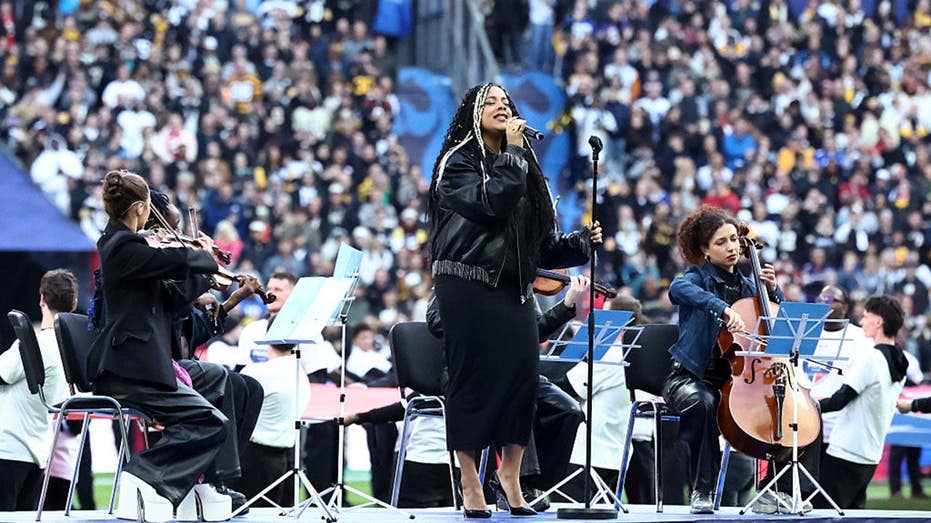
Nina Tonji's Altered La Marseillaise Sparks Outrage in France
Singer Nina Tonji modified French national anthem lyrics at NFL Paris game, leading to widespread criticism and accusations of disrespect.
PARIS – Nina Tonji, the singer chosen to perform the French national anthem "La Marseillaise" before the NFL game between the Pittsburgh Steelers and the New Orleans Saints at the Stade de France, has ignited a firestorm of controversy by altering the song's lyrics.
The performance, intended as a cultural highlight for the historic NFL game in Paris, instead became the focal point of public backlash. Tonji's rendition deviated from the traditional wording, with reports indicating she introduced themes of immigrant unity and integration, shifting the anthem's historically martial and nationalistic tone.
Sources close to the situation and public commentary indicate that the changes were met with significant disapproval from a segment of the French public and commentators. Critics have accused Tonji of disrespecting national heritage and the anthem itself, which is deeply ingrained in French identity and history. The alterations were widely perceived as an attempt to impose a modern, progressive message onto a song revered for its historical significance.
The incident raises questions about the appropriateness of modifying national symbols for entertainment events and highlights the sensitivity surrounding "La Marseillaise" in France. The NFL, which aims to expand its global reach, now faces scrutiny over the cultural impact of its international events.
"La Marseillaise," written in 1792, has lyrics that speak of fighting tyranny and defending the homeland. Its powerful and often militant verses are a significant part of French national pride. Any deviation from its established text is likely to be met with strong reactions, particularly in a nation that places a high value on its historical and cultural traditions.
Commentators and social media users expressed a range of negative sentiments, with many calling the performance an "insult" to France and its history. Some argued that while inclusivity is important, the national anthem is not the appropriate venue for such social commentary. The controversy has spilled beyond sports discussions into broader debates about national identity and cultural expression in contemporary France.
This incident is not the first time a national anthem performance has drawn criticism, but the specific context of an international sporting event and the deeply symbolic nature of "La Marseillaise" have amplified the response. The NFL has yet to issue a formal statement regarding the controversy surrounding Tonji's performance.
As the NFL continues to explore international markets, this event serves as a stark reminder of the cultural nuances and potential pitfalls involved in staging major events abroad. The debate over Tonji's performance is likely to continue, reflecting deeper societal discussions within France about its past, present, and future.
This article was written by AI based on publicly available news reporting. Original reporting by the linked source.